
 Recommended On
The Everest Base Camp Trek is a 14-day guided trekking route in Nepal's Khumbu region. It starts with a 35-minute flight from Kathmandu to Lukla (2,840 m), passes through Namche Bazaar, Tengboche, Dingboche, and Lobuche, and reaches Everest Base Camp at 5,364 m and Kala Patthar at 5,545 m. Two permits are required: the Sagarmatha National Park Permit (NPR 3,000) and the Khumbu Pasang Lhamu Rural Municipality Permit (NPR 3,000). World Expedition Nepal organizes this trek for USD 1,360 per person with fixed spring and autumn departures, a licensed guide, porter, all trek meals, and 3-star hotel accommodation in Kathmandu.
What Is the Everest Base Camp Trek?
The Everest Base Camp Trek is a 14-day high-altitude trekking route in Nepal's Solukhumbu district. It follows the Dudh Koshi River from Lukla (2,840 m) to Everest Base Camp (5,364 m) and Kala Patthar (5,545 m), covering approximately 130 km round trip inside Sagarmatha National Park, a UNESCO World Heritage Site covering 1,148 sq km.
The trail passes through Sherpa villages, Buddhist monasteries, mani stone walls, and prayer flag lines with views of 4 eight-thousanders: Everest (8,848.86 m), Lhotse (8,516 m), Makalu (8,485 m), and Cho Oyu (8,188 m). Approximately 40,000 trekkers complete the EBC route each year. The trek requires no technical climbing skills. A licensed guide is mandatory for all foreign trekkers under Nepal's Department of Tourism regulations effective April 2023.
Everest Base Camp Trek Highlights
-
Reach Everest Base Camp at 5,364 m, the staging point for all Nepal-side Everest summit expeditions
-
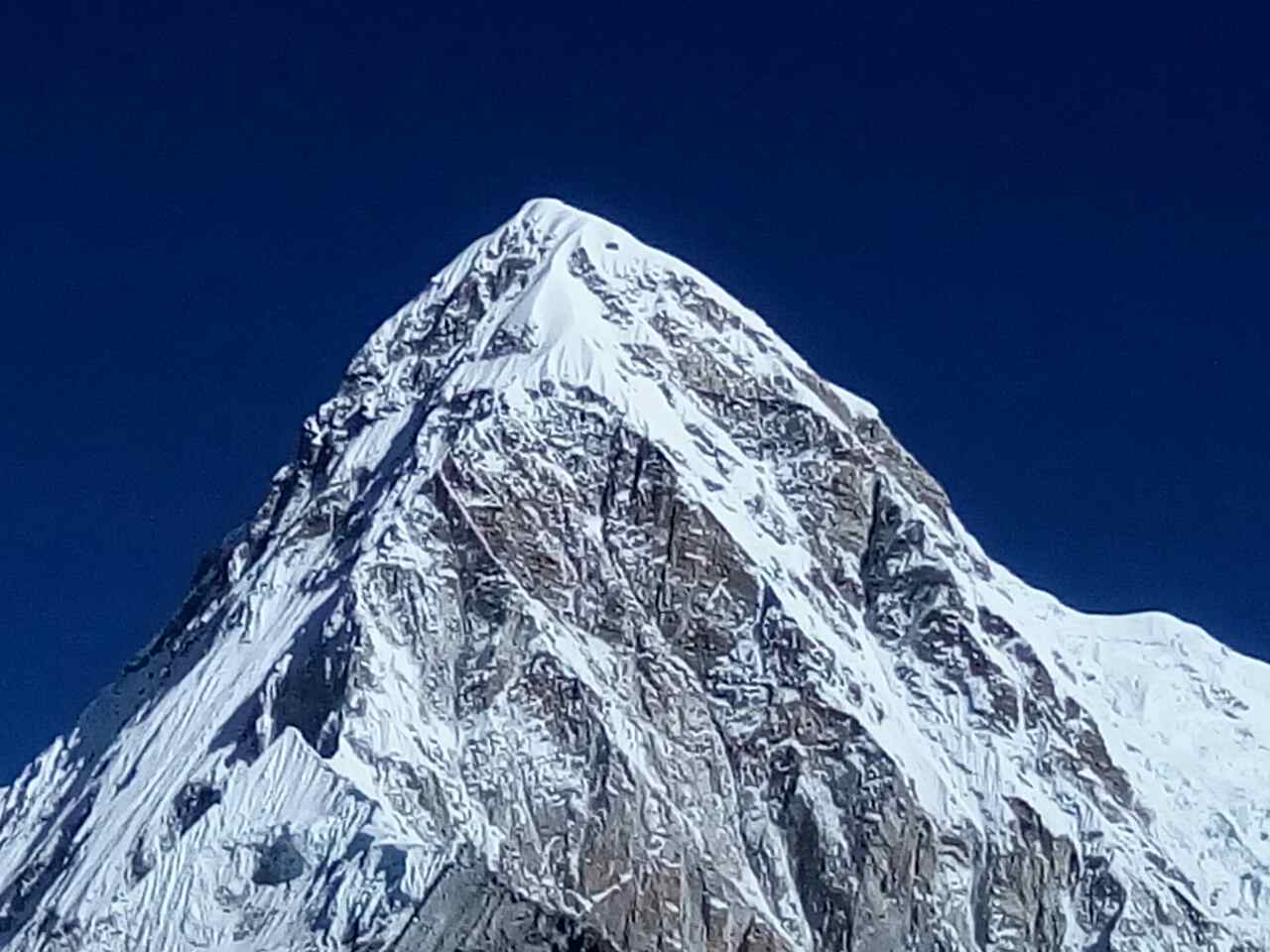
Climb Kala Patthar (5,545 m) for a 360-degree view of Everest, Lhotse, Nuptse, Pumori, and Cho Oyu
-
Fly into Tenzing-Hillary Airport in Lukla, a 527-metre mountain airstrip at 2,840 m
-
Walk through Namche Bazaar (3,440 m), the main commercial and cultural hub of the Khumbu
-
Visit Tengboche Monastery (3,867 m), the largest Buddhist gompa in the Everest region
-
Hike to Everest View Hotel (3,880 m), the highest placed hotel in the world, for the first Everest sighting
-
Walk alongside the Khumbu Glacier, extending from 4,900 m to 5,400 m at the Khumbu Icefall
-
Experience Sherpa culture, Tibetan Buddhism, and high-altitude Himalayan village life across 14 days
Everest Base Camp Trek Itinerary (14 Days)
The 14-day EBC Trek itinerary starts with arrival in Kathmandu (1,350 m), flies to Lukla (2,840 m) on Day 2, and progresses through Namche Bazaar, Tengboche, Dingboche, and Lobuche to Gorak Shep (5,164 m) before Kala Patthar (5,545 m) on Day 9 and Everest Base Camp (5,364 m) on Day 10, then returns to Kathmandu via Lukla by Day 14.
Day 1: Arrival in Kathmandu (1,350 m)
Meals: Breakfast.
Accommodation: 3-star hotel, Kathmandu.
A World Expedition Nepal representative meets trekkers at Tribhuvan International Airport. The pre-trek briefing covers gear checks, permit documentation, Lukla flight timing, and altitude guidelines. Trekkers submit passport copies and 2 passport photos for permit processing.
Day 2: Flight to Lukla (2,840 m) and Trek to Phakding (2,800 m)
Distance: 6.2 km.
Walking time: 3 to 4 hours.
Meals: Breakfast, Lunch, Dinner.
Accommodation: Tea house, Phakding.
The Kathmandu to Lukla flight takes 35 minutes and lands at Tenzing-Hillary Airport. During peak season, flights depart from Manthali Airport in Ramechhap to reduce Kathmandu congestion. After meeting the guide and porter, the trail descends gently along the Dudh Koshi River through Cheplung and Ghat to Phakding (2,800 m). This gentle first day eases trekkers into altitude and trail conditions.
Day 3: Phakding to Namche Bazaar (3,440 m)
Distance: 7.5 km.
Walking time: 5 to 6 hours.
Elevation gain: 640 m.
Meals: Breakfast, Lunch, Dinner.
Accommodation: Tea house, Namche Bazaar.
The trail crosses 3 suspension bridges over the Dudh Koshi River before reaching the Sagarmatha National Park permit checkpoint at Monjo (2,835 m). Rangers verify both permits here. Trekkers without permits are turned back at Monjo. The Hillary Suspension Bridge at 3,400 m is the final crossing before the steep 45-minute climb into Namche Bazaar. Namche (3,440 m) has 30 to 40 tea houses, ATMs, bakeries, and a Saturday weekly market.
Day 4: Acclimatization Day in Namche Bazaar (3,440 m)
Optional hike to 3,880 m.
Sleep altitude: 3,440 m.
Meals: Breakfast, Lunch, Dinner.
Accommodation: Tea house, Namche Bazaar.
The acclimatization hike goes to the Everest View Hotel at Syangboche (3,880 m), the highest placed hotel in the world. The terrace gives the first direct views of Everest, Lhotse, Nuptse, and Ama Dablam. The guide takes SpO2 readings each evening from Namche onward. Readings below 88% at rest require a rest day before proceeding.
Day 5: Namche Bazaar to Tengboche (3,867 m)
Distance: 9 km.
Walking time: 5 to 6 hours.
Elevation gain: 427 m.
Meals: Breakfast, Lunch, Dinner.
Accommodation: Tea house, Tengboche.
The trail descends 300 m to Phunki Thanga then climbs through rhododendron and fir forest to Tengboche. Ama Dablam (6,812 m) dominates the eastern skyline throughout. Tengboche Monastery (3,867 m), founded in 1916 and rebuilt after the 1934 and 1989 earthquakes, is the largest gompa in the Khumbu. Entry fee: NPR 500. Prayer ceremonies run at 3:00 PM and 5:00 AM daily.
Day 6: Tengboche to Dingboche (4,360 m)
Distance: 12 km.
Walking time: 4 to 5 hours.
Elevation gain: 493 m.
Meals: Breakfast, Lunch, Dinner.
Accommodation: Tea house, Dingboche.
The trail passes Pangboche (3,985 m), the highest permanently inhabited Sherpa village in the Everest region, before following the Imja Valley to Dingboche (4,360 m). Views of Lhotse South Face (8,516 m), Island Peak (6,189 m), and Ama Dablam open up along the valley. Dingboche has 15 to 18 tea houses and a seasonal medical post. Hydration increases to 3 to 4 litres per day from here onward.
Day 7: Acclimatization Day in Dingboche (4,360 m)
Optional hike to Nangkartshang Peak (5,083 m).
Sleep altitude: 4,360 m.
Meals: Breakfast, Lunch, Dinner.
Accommodation: Tea house, Dingboche.
The recommended acclimatization hike climbs to Nangkartshang Peak (5,083 m), a 4 to 5 hour round trip gaining 723 m. This simulates Kala Patthar altitude and reduces AMS risk on Day 9 by approximately 35%. The Himalayan Rescue Association post at Pheriche (4,280 m), 30 minutes from Dingboche, holds a free AMS lecture at 3:00 PM daily in October and November.
Day 8: Dingboche to Lobuche (4,940 m)
Distance: 11 km.
Walking time: 5 to 6 hours.
Elevation gain: 580 m.
Meals: Breakfast, Lunch, Dinner.
Accommodation: Tea house, Lobuche.
The trail passes through Thukla (4,620 m) then climbs the moraine to the Thukla Pass Memorial at 4,830 m, a ridge of stone chortens for climbers who died on Everest, including Scott Fischer and Rob Hall (both 1996 Everest disaster). The first clear view of the Khumbu Glacier appears here. Lobuche (4,940 m) has 5 to 7 basic tea houses with no attached bathrooms or hot showers. Night temperatures drop to -10 to -15 degrees Celsius in October and November.
Day 9: Lobuche to Gorak Shep (5,164 m) and Hike to Kala Patthar (5,545 m)
Distance: 12 km round trip.
Walking time: 6 to 7 hours.
Elevation gain: 605 m total.
Meals: Breakfast, Lunch, Dinner.
Accommodation: Tea house, Gorak Shep.
The trail from Lobuche crosses the Khumbu Glacier lateral moraine to Gorak Shep (5,164 m), the last settlement before EBC with 4 basic tea houses and no hot showers. Kala Patthar (5,545 m) sits on Pumori's southern ridge, 181 m above Everest Base Camp, and delivers a clearer, unobstructed view of Everest's South Face than base camp itself. The 360-degree summit view includes Everest, Lhotse, Nuptse, Pumori (7,161 m), and Cho Oyu. Wind at Kala Patthar exceeds 50 km/h in the afternoon. Trekkers summit before 10:00 AM for the clearest conditions.
Day 10: Gorak Shep to Everest Base Camp (5,364 m) and Trek to Pheriche (4,280 m)
Distance: 18 km.
Walking time: 7 to 8 hours.
Elevation: +200 m to EBC, -1,084 m to Pheriche.
Meals: Breakfast, Lunch, Dinner.
Accommodation: Tea house, Pheriche.
Trekkers leave Gorak Shep at 7:00 AM for Everest Base Camp (5,364 m), a 3 km walk across the Khumbu Glacier moraine. During spring (April to May), base camp holds 400 to 600 tents from international Everest expedition teams. During autumn, trekkers see the Khumbu Glacier and Khumbu Icefall without active expedition activity. After 45 to 60 minutes at base camp, the descent to Pheriche covers 15 km in 4 to 5 hours. Trekking poles are essential for this sustained descent. The Himalayan Rescue Association hospital at Pheriche is the highest staffed medical facility in the Khumbu.
Day 11: Pheriche to Namche Bazaar (3,440 m)
Distance: 16 km.
Walking time: 6 to 7 hours.
Descent: 840 m.
Meals: Breakfast, Lunch, Dinner.
Accommodation: Tea house, Namche Bazaar.
The descent through Pangboche and Tengboche returns trekkers to Namche Bazaar. Breathing, energy, and appetite improve noticeably as altitude drops through the 3,000 m zone. Namche on the return offers ATM access, bakeries, and broader restaurant menus.
Day 12: Namche Bazaar to Lukla (2,840 m)
Distance: 14 km.
Walking time: 5 to 6 hours.
Descent: 600 m.
Meals: Breakfast, Lunch only.
Accommodation: Tea house, Lukla.
The final trekking day follows the Dudh Koshi valley south through Monjo, Jorsale, and Phakding before the climb into Lukla. Arrival in Lukla marks the end of the trekking section.
Day 13: Flight from Lukla to Kathmandu
Flight time: 35 minutes.
Meals: Breakfast only.
Accommodation: 3-star hotel, Kathmandu.
Lukla flights operate on visual flight rules between 6:00 AM and 12:00 PM. Weather delays of 1 to 2 days occur regularly in both seasons. World Expedition Nepal builds 1 buffer night into the Kathmandu itinerary for this reason. A complimentary farewell dinner is included at a cultural restaurant in Kathmandu.
Day 14: Final Departure from Kathmandu
Meals: Breakfast only.
Private vehicle transfer to Tribhuvan International Airport. Hotel check-out is 12:00 PM. The EBC Trek officially ends on departure.
Everest Base Camp Trek Difficulty
The EBC Trek is rated moderate to challenging. Altitude is the primary difficulty, not terrain. At Kala Patthar (5,545 m), each breath delivers approximately 53 percent of the oxygen available at sea level. 30 to 40 percent of trekkers experience AMS symptoms above 3,500 m. The trail requires no technical climbing skills.
Altitude Sickness Risks and Prevention
AMS symptoms above 3,500 m include persistent headache, nausea, dizziness, and SpO2 below 88% at rest. HACE and HAPE are medical emergencies requiring immediate helicopter evacuation from Gorak Shep, which costs USD 5,000 to 10,000. The 2 acclimatization days at Namche (Day 4) and Dingboche (Day 7) reduce AMS risk by 40%. Skipping either day raises AMS risk to approximately 60% for altitude-naive trekkers. Signs requiring same-day descent: SpO2 below 85% at rest, wet cough without exertion, confusion, or loss of balance.
Can Beginners Do the Everest Base Camp Trek?
Beginners complete the EBC Trek regularly with 4 to 6 weeks of physical preparation. The trail is well-marked, tea houses are available every 6 to 12 km, and a licensed guide manages pace and daily SpO2 monitoring. The most common reason beginners fail to finish is inadequate fitness before departure, not trail difficulty.
Everest Base Camp Trek Cost
The Everest Base Camp Trek costs USD 1,360 per person with World Expedition Nepal for a fully guided 14-day package. This includes Lukla round-trip flights, both permits (total NPR 6,000), licensed guide and porter, all trek meals, tea house accommodation, and 3-star hotel in Kathmandu with breakfast.
Cost Breakdown
|
Cost Item |
Amount |
Included in WEN Package |
|
WEN Package |
USD 1,360 per person |
Full package |
|
Sagarmatha NP Permit |
NPR 3,000 (USD 25) |
Yes |
|
Khumbu Pasang Lhamu Permit |
NPR 3,000 (USD 25) |
Yes |
|
Lukla Round-Trip Flight |
USD 350 to 420 |
Yes |
|
Guide and Porter (full expenses) |
Included |
Yes |
|
Tea House Accommodation |
All trek nights, twin-sharing |
Yes |
|
3-Star Hotel Kathmandu (2 nights) |
With breakfast |
Yes |
|
All Trek Meals |
Breakfast, Lunch, Dinner |
Yes |
|
Hot Shower on Trail |
USD 2 to 5 per shower |
No |
|
Wi-Fi on Trail |
USD 2 to 5 per day |
No |
|
Travel Insurance |
USD 80 to 200 |
No |
|
Nepal Visa (15-day) |
USD 30 |
No |
|
Tips (guide and porter) |
USD 150 to 250 total |
No |
Everest Base Camp Trek Permits
2 permits are mandatory for the EBC Trek: the Sagarmatha National Park Entry Permit (NPR 3,000 / USD 25) and the Khumbu Pasang Lhamu Rural Municipality Permit (NPR 3,000 / USD 25). Total permit cost is NPR 6,000 (approx. USD 50). Both are included in the World Expedition Nepal package.
The Sagarmatha National Park Permit is available at the Nepal Tourism Board in Kathmandu or the Monjo checkpoint on the trail. The Khumbu Pasang Lhamu Permit is available at Lukla or Monjo only and cannot be obtained from the Nepal Tourism Board in Kathmandu. This permit was introduced in 2018 after Nepal's government decentralization and was increased from NPR 2,000 to NPR 3,000 in September 2024. It is named in honor of Pasang Lhamu Sherpa, the first Nepali woman to summit Everest. Permits are verified at Monjo checkpoint on entry and are non-refundable once issued.
Best Time for the Everest Base Camp Trek
The best time for the Everest Base Camp Trek is October and November in autumn and March and April in spring. These 4 months provide clear skies, stable trail conditions, and temperatures at Kala Patthar between -8 and -20 degrees Celsius. October is the peak month with the highest trekker numbers.
|
Season |
Months |
Kala Patthar Temp |
Trail Condition |
Recommendation |
|
Spring (Best) |
March to May |
-8 to -15 C |
Clear, rhododendrons bloom |
Best for active expedition views at EBC |
|
Autumn (Best) |
September to November |
-10 to -20 C |
Dry, stable, crystal clear |
Best overall for visibility |
|
Winter |
December to February |
-15 to -30 C |
Open but very cold at altitude |
Possible with extra cold-weather gear |
|
Monsoon |
June to August |
-5 to -10 C |
Rain, leeches below 3,000 m |
Not recommended |
Spring offers active Everest expedition camps at EBC in April and May. Autumn delivers the clearest skies of the year. December remains possible but night temperatures at Gorak Shep drop to -25 degrees Celsius.
Everest Base Camp Trek vs Other Popular Treks
The EBC Trek (14 days, 130 km, 5,545 m) requires a Lukla flight (USD 350 to 420) that Annapurna Base Camp and Annapurna Circuit do not. EBC reaches higher altitude than Annapurna Base Camp (4,130 m) and provides views of 4 eight-thousanders versus 3 on either Annapurna route.
|
Factor |
Everest Base Camp |
Annapurna Base Camp |
Annapurna Circuit |
|
Duration |
14 days |
9 days |
13 days |
|
Max Altitude |
5,545 m |
4,130 m |
5,416 m |
|
WEN Price |
USD 1,360 |
USD 750 |
USD 1,370 |
|
Domestic Flight |
Yes (Lukla) |
No |
No |
|
Eight-Thousanders Visible |
4 |
3 |
3 |
|
Route Type |
Out and back |
Out and back |
Full circuit |
-
Choose EBC for the closest non-climbing view of Mount Everest and Sherpa culture immersion.
-
Choose Annapurna Base Camp for a shorter first Himalayan trek with lower maximum altitude.
-
Choose Annapurna Circuit for maximum geographic diversity and the Thorong La Pass crossing (5,416 m).
Why Trek Everest Base Camp With World Expedition Nepal?
World Expedition Nepal is a government-registered trekking company established in 2017, licensed by Nepal's Department of Tourism and associated with TAAN. The USD 1,360 package includes Lukla flights, both permits, licensed guide, porter, all trek meals, accommodation, and 24-hour emergency support throughout the trek.
Every guide holds a current NTB Trekking Guide Licence, an 80-hour Wilderness First Aid Certificate, and a mountain medicine endorsement for routes above 3,500 m. The guide carries a calibrated pulse oximeter and takes SpO2 readings every evening from Namche onward. Groups exceeding 6 trekkers receive an assistant guide at no extra cost. Emergency helicopter contacts in the Khumbu region are pre-arranged for every departure.
What Is Included
-
Airport pickup and drop by private vehicle
-
3-star hotel in Kathmandu (2 nights) with breakfast
-
Lukla round-trip domestic flights
-
Both mandatory permits
-
Government-licensed English-speaking guide with full expenses and insurance
-
1 porter per 2 trekkers with meals, accommodation, salary, and insurance
-
All trek meals (breakfast, lunch, dinner including tea and coffee)
-
Tea house accommodation on twin-sharing basis
-
Medical kit and pulse oximeter carried by the guide
-
All government and local taxes
-
Complimentary farewell dinner in Kathmandu
What Is Not Included
-
Nepal visa fee (USD 30 for 15 days)
-
International airfare
-
Travel insurance with helicopter evacuation cover (mandatory, trekker arranges)
-
Hot shower, Wi-Fi, and phone charging costs on the trail
-
Personal snacks and drinks
-
Tips for guide, porter, and driver (USD 150 to 250 total recommended)
-
Extra Kathmandu accommodation due to Lukla flight delays
Contact World Expedition Nepal at info@worldexpeditionnepal.com or reach operations manager Sujan Neupane on WhatsApp at +9779851212358 for departure dates and availability.
FAQs About Everest Base Camp Trek
How long is the Everest Base Camp Trek?
The Everest Base Camp Trek is 14 days with World Expedition Nepal. The trekking section runs 12 days from Lukla to Kala Patthar and back, with 2 days in Kathmandu for arrival and departure.
How difficult is the Everest Base Camp Trek?
The EBC Trek is rated moderate to challenging. Altitude is the main difficulty, not terrain. 30 to 40 percent of trekkers experience AMS above 3,500 m. Both acclimatization days at Namche and Dingboche are essential to manage this risk.
What is the maximum altitude of the trek?
Kala Patthar at 5,545 m is the highest point. Everest Base Camp sits at 5,364 m. Both are reached on Days 9 and 10, departing from Gorak Shep at 5,164 m.
How much does the Everest Base Camp Trek cost?
The World Expedition Nepal 14-day EBC package costs USD 1,360 per person, including Lukla flights, both permits, guide, porter, all trek meals, accommodation, and 3-star hotel in Kathmandu.
Do I need permits for the Everest Base Camp Trek?
Two permits are mandatory: the Sagarmatha National Park Permit (NPR 3,000) and the Khumbu Pasang Lhamu Permit (NPR 3,000). Total cost is NPR 6,000 (approx. USD 50). Both are included in the World Expedition Nepal package.
Can beginners do the Everest Base Camp Trek?
Yes. Beginners with good fitness can complete the trek by following a gradual itinerary, training beforehand, and allowing enough time for acclimatization to reduce the risk of altitude sickness.
Is travel insurance mandatory?
Travel insurance is not legally required but is strongly recommended. A policy covering high-altitude trekking and emergency helicopter evacuation can protect against significant medical and rescue expenses.
What accommodation is available during the trek?
Most trekkers stay in teahouses offering basic private rooms, shared bathrooms, meals, and common dining areas. Accommodation quality generally improves in lower villages and becomes more basic at higher elevations.
Can I return by helicopter from Everest Base Camp?
Yes. Many trekkers choose a helicopter return from Everest Base Camp or Gorak Shep to Lukla or Kathmandu, reducing the return journey and providing aerial views of the Himalayas.
