
 Recommended On
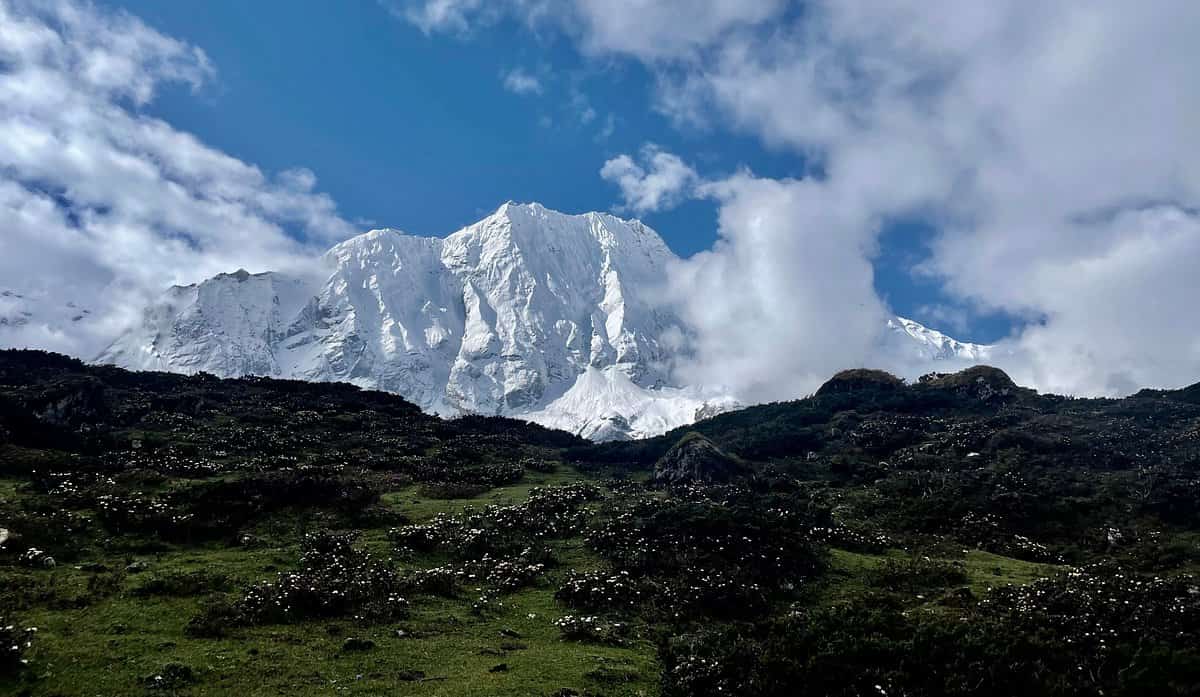
The Everest North Side Expedition is a 66-day guided mountaineering expedition that ascends Mount Everest at 8,848 meters via the Northeast Ridge route from the Tibet side. The expedition crosses from Kathmandu to Tibet at Rasuwa Ghadhi, drives through Kyirong and Thingri to Everest Base Camp at 5,200 meters on the Tibetan plateau, and climbs through Intermediate Camp (6,200 m), Advanced Base Camp (6,400 m), Camp I at North Col (7,000 m), Camp II (7,500 m), and Camp III (8,200 to 8,300 m) to the summit. The package price is USD 46,200 per person with World Expedition Nepal.
The North Side Tibet route avoids the Khumbu Icefall, the most dangerous fixed hazard on the South Col route. Base Camp is accessible by road rather than a six-day approach trek, and the Advanced Base Camp at 6,400 meters is the highest ABC in the Himalayan range. The Northeast Ridge route crosses the Yellow Band, passes Mushroom Rock at 8,600 meters, and ascends the Second Step, a 30-foot near-vertical ladder section above a 9,000-foot drop, before reaching the summit ridge.
Everest North Side Expedition Highlights
-
Summit Mount Everest at 8,848 meters via the legendary Northeast Ridge Tibet route
-
Avoid the Khumbu Icefall entirely: the primary structural hazard on the South Col route does not exist on the North Side
-
Drive access to Everest Base Camp, Tibet at 5,200 meters, eliminating the 6-day approach trek
-
Rongbuk Monastery visit, the world's highest seated monastery, near the base camp area
-
Advanced Base Camp at 6,400 meters, the highest ABC in the Himalayas
-
Panoramic summit views of Lhotse, Makalu, Cho Oyu, Changatse, Nuptse, and the Mahalangur range
-
Tibetan plateau expedition experience through Kyirong and Thingri before reaching the mountain
-
Multi-camp rotation system through North Col, Camp II, and Camp III before the summit push
Everest North Side vs South Side: Key Structural Differences
The North Side Tibet route and the South Side Nepal route are two fundamentally different expedition systems. The North Side eliminates the Khumbu Icefall, uses vehicle access to base camp, and ascends via the Northeast Ridge through the Second Step. The South Side is approached by trek and ascends via the South Col and Hillary Step.
The Khumbu Icefall on the Nepal route is a constantly moving glacial zone with unpredictable serac collapse and crevasse danger that climbers must cross multiple times during acclimatization rotations. The North Side eliminates this hazard by approaching from Tibet. However, the North Side introduces different technical demands: the exposed northeast ridge above 8,000 meters, the Yellow Band rock band, the Mushroom Rock traverse at 8,600 meters, and the Second Step ladder climb above a near-vertical drop.
Base camp accessibility is a structural advantage on the North Side. Nepal route climbers walk 6 days from Lukla to reach base camp at 5,364 meters. North Side climbers drive from Thingri to base camp at 5,200 meters in 3 to 5 hours. This vehicle access simplifies logistics and reduces pre-expedition fatigue.
Rescue limitations differ significantly. Nepal South Side has helicopter access to base camp for medical evacuation. China does not permit helicopter flights across Everest from the Tibet side. Emergency evacuation from the North Side requires ground descent to lower elevations, making altitude sickness management and team health monitoring more critical.
Everest North Side Climbing Route
The Northeast Ridge route ascends from Advanced Base Camp at 6,400 meters through North Col at 7,000 meters, Camp II at 7,500 meters, and Camp III at 8,200 to 8,300 meters to the summit at 8,848 meters. The summit push from Camp III takes 12 to 14 hours.
The East Rongbuk Glacier approach from ABC to Camp I at North Col crosses the glacier for approximately one hour before reaching the fixed rope sections. Deep crevasses on the glacier require ladder crossings and fixed rope navigation. Sherpa teams fix ropes before the expedition climbing period begins.
The Yellow Band above Camp II is a distinctive geological feature of tilted limestone that creates exposed, technically demanding climbing. Climbers use crampons and fixed ropes through this section. Above the Yellow Band, Mushroom Rock at 8,600 meters marks the approach to the most demanding section of the route.
The Second Step is the critical technical bottleneck on the Northeast Ridge. It consists of two rock faces: a 10-foot rock slab and a near-vertical ladder exceeding 30 feet fixed above a 9,000-foot vertical drop. The Chinese 1975 expedition installed the original ladder. Climbers ascend and descend the Second Step using the ladder with crampons, requiring precise technique on both ascent and descent. A misplaced crampon on the ladder represents the highest single point of danger on the entire North Side route.
The summit push begins at midnight from Camp III. Climbers using supplemental oxygen from the Yellow Band upward reach the summit between 8:00 and 10:00 AM on a favorable weather window.
Detailed 66-Day Itinerary
Day 1: Arrival at Tribhuvan International Airport in Kathmandu (1,345 m)
Upon arrival at Tribhuvan International Airport (TIA), Kathmandu, you will complete immigration formalities, baggage collection, and customs clearance. Nepal offers a visa-on-arrival facility for most nationalities, and our team will guide if required.
After exiting the terminal, a representative from World Expedition Nepal will welcome you and transfer you to your hotel in Thamel. Depending on traffic conditions, the drive typically takes 30 to 45 minutes. Along the way, you will experience your first glimpse of Kathmandu's vibrant streets, historic temples, traditional architecture, and bustling local markets.
After hotel check-in, you will have time to rest and recover from your international journey. Kathmandu's relatively low elevation compared to the Everest region provides an ideal starting point before heading into Tibet and higher altitudes.
In the evening, meet your expedition leader, Sherpa team, and fellow climbers for a comprehensive expedition briefing. The session covers the complete 66-day itinerary, climbing strategy, safety procedures, communication systems, equipment requirements, weather considerations, and expedition logistics.
Following the briefing, enjoy a welcome dinner at a traditional Nepali restaurant where you can get acquainted with the team before the expedition begins.
Meals: Lunch and Dinner
Accommodation: Hotel
Elevation: 1,345 m
Days 2-3: Permit Processing, Preparation, Last-Minute Shopping, and Briefing
These two days are dedicated to completing all administrative requirements and final expedition preparations before departure for Tibet.
Our team will assist with documentation and permit procedures required for the Everest North Side Expedition. Climbers must obtain several permits issued through Chinese and Tibetan authorities, including the Tibet Entry Permit and the China Tibet Mountaineering Association (CTMA) climbing permit. Expedition members are also briefed on regulations governing climbing activities in Tibet.
During this period, climbers conduct a complete equipment inspection and purchase any remaining items from Kathmandu's mountaineering stores. All technical climbing equipment, personal clothing systems, oxygen equipment, communication devices, and safety gear are carefully reviewed before departure.
The expedition team also conducts detailed briefings covering:
-
Expedition schedule and route overview
-
Camp structure and acclimatization rotations
-
Summit strategy and weather forecasting
-
Emergency response procedures
-
Communication systems
-
Oxygen usage protocols
-
Team responsibilities and logistics
These extra days provide an opportunity to relax, recover from travel, organize personal equipment, and prepare mentally for the expedition ahead.
Meals: Breakfast, Lunch, and Dinner
Accommodation: Hotel
Elevation: 1,345 m
Day 4: Drive from Kathmandu to Rasuwa Ghadhi (1,804 m)
After breakfast, depart Kathmandu and begin the overland journey toward the Nepal-China border.
The drive follows the Trishuli River corridor through scenic mountain landscapes, terraced hillsides, rural villages, and winding roads. Along the route, you pass through Trishuli Bazaar and Dhunche, the administrative center of Rasuwa District.
The journey covers approximately 120 to 150 kilometers and generally takes between 5 and 7 hours, depending on road conditions and traffic. Several stops are made for meals, refreshments, and short breaks.
Upon arrival at Rasuwa Ghadhi, complete preliminary border formalities and prepare for the international border crossing into Tibet on the following day.
Meals: Breakfast, Lunch, and Dinner
Accommodation: Hotel
Elevation: 1,804 m
Day 5: Border Crossing and Drive to Kyirong (4,114 m)
Today marks the official entry into Tibet.
After completing Nepal immigration procedures at Rasuwa Ghadhi, cross the border and proceed to the Chinese immigration checkpoint. Following customs and immigration formalities, continue into Tibet and begin the drive to Kyirong.
The route gradually ascends into the Tibetan Plateau, passing through deep valleys, mountain ridges, rivers, and dramatic Himalayan landscapes. The drive from the border to Kyirong covers approximately 25 kilometers and takes around 1 to 2 hours.
Kyirong is the first major Tibetan settlement encountered after crossing the border and serves as an important acclimatization stop for Everest expeditions. Upon arrival, check into your hotel and spend the remainder of the day resting and adapting to the higher altitude.
Meals: Breakfast, Lunch, and Dinner
Accommodation: Hotel
Elevation: 4,114 m
Day 6: Acclimatization Day in Kyirong (4,114 m)
A full acclimatization day is scheduled in Kyirong to help the body adjust to the higher elevation before ascending further into Tibet.
The day is generally spent resting, taking short walks around town, organizing equipment, and preparing for the next stage of the expedition. Expedition leaders monitor the team's condition and guide altitude management and acclimatization practices.
Kyirong offers a comfortable environment for gradual adaptation and plays an important role in reducing the risk of altitude-related illnesses before moving to higher elevations.
Meals: Breakfast, Lunch, and Dinner
Accommodation: Hotel
Elevation: 4,114 m
Day 7: Drive from Kyirong to Thingri (4,350 m)
After breakfast, continue across the Tibetan Plateau toward Thingri.
The drive covers approximately 175 kilometers and takes around 5 to 7 hours. The route offers spectacular views of snow-covered mountains, expansive grasslands, traditional Tibetan settlements, and remote high-altitude landscapes.
As the elevation gradually increases, climbers continue adapting to thinner air while enjoying one of the most scenic sections of the overland approach.
Thingri serves as an important acclimatization stop and the final major settlement before reaching Everest Base Camp.
Meals: Breakfast, Lunch, and Dinner
Accommodation: Hotel
Elevation: 4,350 m
Day 8: Acclimatization Day in Thingri (4,350 m)
Today is reserved for acclimatization and preparation before moving to Everest Base Camp.
Climbers spend the day resting, organizing equipment, reviewing climbing systems, and taking short acclimatization walks around Thingri. The expedition team conducts final checks and discusses the upcoming move toward the mountain.
This additional acclimatization day helps improve adaptation before entering the Everest Base Camp environment.
Meals: Breakfast, Lunch, and Dinner
Accommodation: Hotel
Elevation: 4,350 m
Day 9: Drive to Everest Base Camp, Tibet (5,200 m)
Continue the expedition with a drive from Thingri to Everest Base Camp.
The route travels through the high Tibetan Plateau and passes the famous Rongbuk Monastery, the highest monastery in the world. From here, stunning views of Everest's North Face dominate the horizon.
The final section follows a rough mountain road leading directly to Everest Base Camp. Upon arrival, settle into the expedition-tented camp and begin acclimatization at the foot of the world's highest mountain.
Meals: Breakfast, Lunch, and Dinner
Accommodation: Tented Camp
Elevation: 5,200 m
Days 10-12: Acclimatization and Load Preparation at Everest Base Camp (5,200 m)
These three days are spent at Everest Base Camp to allow proper acclimatization before moving higher onto the mountain. Everest Base Camp on the Tibet side serves as the primary logistics hub where expedition supplies, technical equipment, food, oxygen cylinders, and climbing gear are organized before being transported to Advanced Base Camp.
During this period, climbers participate in acclimatization hikes around the Base Camp area and lower sections of the Rongbuk Glacier. These short excursions help the body adapt to the reduced oxygen levels while providing an opportunity to become familiar with the surrounding terrain.
The expedition team conducts glacier and fixed-rope training sessions to refresh essential mountaineering skills. Climbers practice the use of crampons, ascenders, harnesses, fixed lines, and glacier travel techniques that will be required throughout the expedition.
Load preparation is another important task during these days. Equipment, food supplies, fuel, oxygen cylinders, and personal gear are sorted and packed for transport to Advanced Base Camp and the higher camps. Sherpa guides and support staff coordinate the movement of expedition equipment while climbers organize their personal climbing systems.
Regular medical checks are carried out to monitor acclimatization progress. Oxygen saturation levels, heart rate, and overall health are assessed to ensure every team member is adapting well to the altitude before progressing higher.
Daily expedition briefings cover route conditions, camp logistics, acclimatization schedules, weather forecasts, and the upcoming move toward Advanced Base Camp.
Meals: Breakfast, Lunch, and Dinner
Accommodation: Tented Camp
Elevation: 5,200 m
Day 13: Trek to Intermediate Camp (6,200 m)
Today marks the beginning of the climbing approach beyond Everest Base Camp. Leaving the comfort of Base Camp, the expedition follows the East Rongbuk Glacier toward Intermediate Camp.
The route traverses glacial terrain characterized by moraine ridges, ice formations, rocky sections, and occasional crevasse fields. Climbers move steadily at a controlled pace as the effects of altitude become increasingly noticeable above 6,000 meters.
The trek generally takes between 4 and 6 hours, depending on weather conditions, trail conditions, and the acclimatization level of the team. Throughout the journey, climbers are rewarded with increasingly dramatic views of Everest's North Face and the surrounding Himalayan peaks.
Intermediate Camp serves as an important staging point between Base Camp and Advanced Base Camp. While not considered a major operational camp, it provides an additional acclimatization opportunity and allows climbers to gradually adapt before ascending to the highest Advanced Base Camp in the Himalayas.
Upon arrival, the team settles into tents and spends the remainder of the day resting and preparing for the move to Advanced Base Camp the following morning.
Meals: Breakfast, Lunch, and Dinner
Accommodation: Tented Camp
Elevation: 6,200 m
Day 14: Trek to Advanced Base Camp (6,400 m)
After breakfast, continue the ascent from Intermediate Camp to Advanced Base Camp (ABC), the main climbing headquarters for the Everest North Side Expedition.
The route continues across the East Rongbuk Glacier and requires careful movement through rocky glacial terrain. Depending on conditions, sections of the route may involve crossing ice features and navigating uneven moraine landscapes. The trek generally takes between 3 and 5 hours.
As the expedition approaches Advanced Base Camp, the North Face of Mount Everest rises directly above the camp, providing one of the most impressive viewpoints anywhere on the mountain. Situated at approximately 6,400 meters, Advanced Base Camp is recognized as the highest Advanced Base Camp in the Himalayas and serves as the operational center for all acclimatization rotations and summit attempts.
Upon arrival, climbers settle into camp and organize their personal equipment for the upcoming climbing phase. Oxygen systems, climbing gear, communication equipment, and camp supplies are checked and prepared for transport to the higher camps.
During the stay at Advanced Base Camp, climbers continue acclimatization through carefully planned rotations to Camp I, Camp II, and Camp III. Expedition leaders review climbing strategies, weather forecasting procedures, emergency response plans, and summit objectives while maintaining regular communication with support teams and weather services.
The arrival at Advanced Base Camp marks the transition from the approach phase of the expedition to the technical climbing phase that ultimately leads toward the summit of Mount Everest.
Meals: Breakfast, Lunch, and Dinner
Accommodation: Tented Camp
Elevation: 6,400 m
Day 15-58: Climbing Period (Acclimatization Rotations, Camp Establishment, Summit Push, and Return)
The period from Day 15 to Day 58 is the core climbing phase of the Everest North Side Expedition. During these 44 days, climbers establish higher camps, complete acclimatization rotations, wait for favorable weather conditions, and make their summit attempt via the Northeast Ridge route. The exact schedule depends on weather, route conditions, and individual acclimatization rates, but the overall structure follows a proven expedition strategy designed to maximize safety and summit success.
Days 15-19: Establishing Higher Camps
Following acclimatization at Advanced Base Camp (6,400 m), the Sherpa team begins carrying loads and establishing the higher camps required for the summit attempt.
Equipment, food supplies, oxygen cylinders, fuel, ropes, and climbing gear are transported from Advanced Base Camp to:
-
Camp I (North Col) - 7,000 m
-
Camp II - 7,500 m
-
Camp III - 8,200-8,300 m
The route from ABC to North Col follows the East Rongbuk Glacier and includes fixed rope sections and crevasse crossings. Sherpas fix ropes where necessary and prepare camps for future acclimatization rotations and the final summit push.
Throughout this period, climbers assist with load carries according to their strength and acclimatization progress while continuing to adapt to higher altitude conditions.
Days 19-28: Acclimatization Rotations
Once the higher camps are established, climbers begin a series of acclimatization rotations.
The principle of acclimatization is simple: climb high and sleep low. Climbers progressively expose their bodies to higher elevations before descending to recover.
Typical rotation schedules include:
-
Climb from ABC to Camp I and spend several nights.
-
Return to ABC for recovery.
-
Ascend again to Camp I and Camp II.
-
Descend back to ABC.
-
Some climbers may sleep at Camp II depending on their acclimatization response.
These rotations allow the body to increase red blood cell production and adapt to reduced oxygen levels. Throughout the process, guides monitor oxygen saturation levels, heart rate, hydration, and overall health.
During the rotations, climbers become familiar with:
-
Glacier travel techniques
-
Fixed rope systems
-
Ladder crossings
-
High-altitude movement efficiency
-
Oxygen equipment procedures
Climbers generally spend a cumulative 4-5 nights at Camp I during this acclimatization phase.
Days 29-34: Rest and Weather Monitoring at Advanced Base Camp
After completing the major acclimatization rotations, the team returns to Advanced Base Camp for rest and recovery.
This waiting period is one of the most important stages of the expedition. Everest summit attempts depend entirely on weather conditions.
During this period:
-
Daily weather forecasts are received from specialized forecasting services.
-
Jet stream movements are monitored closely.
-
Wind speeds on the summit ridge are analyzed.
-
Snow accumulation and route conditions are evaluated.
While resting at ABC, climbers focus on:
-
Recovery and nutrition
-
Hydration
-
Equipment maintenance
-
Oxygen system checks
-
Mental preparation for summit day
The expedition leader and Sherpa team continuously assess conditions before selecting the summit window.
Days 34-38: Summit Push
When a suitable weather window arrives, the expedition begins the final ascent.
The summit push generally follows this sequence:
Day 1: Advanced Base Camp to Camp I (7,000 m)
Day 2: Camp I to Camp II (7,500 m)
Day 3: Camp II to Camp III (8,200-8,300 m)
Day 4: Summit Day and descent
From Camp III, climbers begin their summit attempt around midnight.
The route above Camp III follows the exposed Northeast Ridge and includes several major landmarks:
Yellow Band
A prominent limestone rock formation requiring careful movement on fixed ropes while wearing crampons.
Mushroom Rock (8,600 m)
A notable feature that marks the approach to the final technical challenges before the summit ridge.
Second Step
The most technical section on the North Side route.
The Second Step consists of:
-
Steep rock climbing sections
-
A near-vertical ladder approximately 30 feet high
-
Exposure above a massive drop
Climbers ascend the ladder using fixed ropes while wearing crampons and carrying oxygen systems.
Above the Second Step, the route continues along the summit ridge toward the highest point on Earth.
Most climbers reach the summit between 8:00 AM and 10:00 AM during favorable conditions.
From the summit at 8,848.86 meters, climbers enjoy views of:
-
Lhotse
-
Makalu
-
Cho Oyu
-
Nuptse
-
Changtse
-
The Mahalangur Himalayan Range
After summit photographs and a brief stay on top, climbers descend carefully back toward Camp III and lower camps.
Days 39-58: Summit Success, Recovery, and Contingency Period
Following the summit attempt, climbers descend gradually to lower camps and return to Advanced Base Camp.
The post-summit period serves several purposes:
-
Physical recovery
-
Medical monitoring
-
Equipment retrieval
-
Camp dismantling
-
Weather contingency planning
If poor weather prevents the first summit attempt, these days provide flexibility for additional summit windows.
The extended climbing period is one of the major advantages of the North Side expedition, allowing multiple opportunities for a successful summit attempt if conditions permit.
During this period, climbers:
-
Rest at ABC
-
Recover from extreme altitude exposure
-
Participate in camp cleanup
-
Assist with the retrieval of equipment from higher camps
-
Prepare for the final descent to Base Camp
The expedition remains based primarily at Advanced Base Camp (6,400 m) until the climbing phase officially concludes and the return journey begins on Day 59.
Overnight: Advanced Base Camp and higher camps during rotations and summit push
Meals: Breakfast, Lunch, Dinner, Tea/Coffee
Accommodation: Tented Camps
Maximum Elevation: 8,848.86 m (Summit of Everest)
Day 59: Trek from Advanced Base Camp (6,400 m) to Intermediate Camp (6,200 m)
After completing the climbing period and summit attempts, the expedition begins its descent from Advanced Base Camp. The route follows the same path used during the ascent across the East Rongbuk Glacier. Although the elevation loss is relatively small, climbers often notice immediate improvements in breathing and overall energy levels as they descend from extreme altitude.
The trail includes glacier terrain, rocky moraine sections, and occasional icy patches that require careful footing. Depending on weather conditions and the team's pace, the descent generally takes 4 to 6 hours. Guides coordinate movement to ensure all members descend safely while remaining together as a group.
Upon reaching Intermediate Camp, climbers settle into tents and enjoy a period of rest and recovery. The lower elevation provides a more comfortable environment after several weeks spent above 6,400 meters. Expedition leaders continue monitoring health conditions, hydration levels, and recovery progress.
Overnight: Intermediate Camp
Accommodation: Tented Camp
Meals: Breakfast, Lunch, Dinner, Tea/Coffee
Elevation: 6,200 m
Day 60: Trek from Intermediate Camp (6,200 m) to Everest Base Camp (5,200 m)
Today, the team continues descending toward Everest Base Camp. The route retraces the glacier approach used during the ascent and offers impressive views of the North Face of Everest, the Rongbuk Glacier, and surrounding Himalayan peaks.
The trek generally takes 3 to 5 hours, depending on trail conditions and the pace of the group. As altitude decreases, oxygen availability improves significantly, allowing climbers to walk more comfortably and recover from the physical demands of the expedition.
Upon arrival at Everest Base Camp, climbers experience a strong sense of accomplishment. Whether members successfully reached the summit or completed valuable high-altitude climbing objectives, returning safely to Base Camp marks the completion of the mountain phase of the expedition.
The remainder of the day is spent resting, enjoying warm meals, reconnecting with support staff, and reflecting on the journey through the North Side of Everest.
Overnight: Everest Base Camp
Accommodation: Tented Camp
Meals: Breakfast, Lunch, Dinner, Tea/Coffee
Elevation: 5,200 m
Day 61: Rest, Recovery, Cleanup, and Packing at Everest Base Camp
This day is dedicated to recovery, expedition debriefing, equipment organization, and environmental cleanup. After spending weeks at extreme altitude, climbers finally have time to rest without the pressure of acclimatization schedules or weather forecasts.
The expedition team conducts a review of the climb, discussing summit outcomes, lessons learned, route conditions, and notable experiences from the expedition. Climbers often spend time sharing stories, reviewing photographs, and celebrating the completion of one of the world's most demanding mountaineering objectives.
A major part of the day is dedicated to camp cleanup. All tents, climbing equipment, oxygen cylinders, food supplies, and expedition waste are carefully sorted and packed for removal. Following Leave No Trace principles, the team works to restore the camp area and minimize environmental impact on the mountain.
Guides organize logistics for the return journey to Tibet and Nepal, ensuring equipment inventories are complete and transportation arrangements are confirmed.
The evening provides one final opportunity to enjoy life at Everest Base Camp before leaving the mountain behind.
Overnight: Everest Base Camp
Accommodation: Tented Camp
Meals: Breakfast, Lunch, Dinner, Tea/Coffee
Elevation: 5,200 m
Days 62-63: Drive from Everest Base Camp to Kyirong (4,114 m)
Day 62: Drive from Everest Base Camp toward Thingri
After dismantling Base Camp, the expedition departs the Everest region and begins the return journey across the Tibetan Plateau. Vehicles transport climbers through the Rongbuk area and past Rongbuk Monastery before continuing toward Thingri.
The drive offers one final opportunity to view Everest's North Face from Tibet. As the road descends, climbers gradually return to lower elevations and continue recovering from the effects of prolonged exposure to extreme altitude.
The route crosses vast Tibetan plains, remote settlements, and spectacular Himalayan landscapes. Depending on logistics and road conditions, the team may overnight in Thingri or another designated stop along the route.
Day 63: Drive from Thingri to Kyirong
The journey continues westward across Tibet toward Kyirong. The drive generally takes 5 to 7 hours and passes through high mountain valleys, traditional Tibetan settlements, and expansive plateau scenery.
Upon arrival in Kyirong, climbers check into a guesthouse or hotel and prepare for the border crossing back into Nepal. The lower elevation provides additional recovery benefits, and many climbers experience improved sleep and energy levels after weeks spent above 5,000 meters.
The remainder of the day is spent relaxing, organizing luggage, and completing preparations for the return to Kathmandu.
Overnight: Kyirong
Accommodation: Hotel/Guesthouse
Meals: Breakfast, Lunch, Dinner, Tea/Coffee
Elevation: 4,114 m
Day 64: Drive from Kyirong to Kathmandu (1,345 m)
Following breakfast, the team completes Chinese exit formalities before crossing the border at Kyirong-Rasuwa Ghadhi. After entering Nepal and completing immigration procedures, the expedition continues by road toward Kathmandu.
The drive typically takes 5 to 7 hours, depending on road and traffic conditions. The route follows mountain roads through Syabrubesi, Dhunche, Trishuli, and the central hills of Nepal.
As the journey progresses, climbers transition from the remote landscapes of Tibet back to the busy environment of Kathmandu. The dramatic contrast between the high Himalayan plateau and Nepal's vibrant capital is immediately noticeable.
Upon arrival in Kathmandu, a transfer to the hotel is arranged. After checking in, climbers can enjoy a hot shower, comfortable accommodation, and a well-deserved opportunity to relax after more than two months in the mountains.
In the evening, a farewell dinner is organized with the expedition team. This final gathering allows climbers, guides, and Sherpas to celebrate the successful completion of the Everest North Side Expedition and share memories from the journey.
Overnight: Kathmandu
Accommodation: Hotel
Meals: Breakfast, Lunch, Farewell Dinner
Elevation: 1,345 m
Day 65: Leisure Day in Kathmandu
This free day provides time for rest, sightseeing, shopping, or cultural exploration before international departure.
Those interested in Nepal's cultural heritage may visit major landmarks such as Boudhanath Stupa, Pashupatinath Temple, Swayambhunath, and Kathmandu Durbar Square. These UNESCO World Heritage Sites provide insight into Nepal's history, religion, and architecture.
Many climbers spend time exploring Thamel, Kathmandu's popular tourist district known for its restaurants, cafés, trekking shops, and souvenir stores. Others choose to relax with a spa treatment or massage after the physically demanding expedition.
Optional activities may include a scenic Everest mountain flight, cultural performances, visits to museums and art galleries, or simply enjoying a relaxed day in the city.
This final day also provides an opportunity to organize equipment, prepare luggage, and reflect on the achievement of climbing on the world's highest mountain.
Overnight: Kathmandu
Accommodation: Hotel
Meals: Breakfast
Elevation: 1,345 m
Day 66: Final Departure from Kathmandu
Today marks the conclusion of the Everest North Side Expedition.
After breakfast, check out from the hotel according to your flight schedule. A representative from World Expedition Nepal will transfer you to Tribhuvan International Airport approximately three hours before departure.
At the airport, complete airline check-in, immigration clearance, and security procedures. Ensure your passport, visa documentation, and travel documents are readily available.
Before boarding your flight, you may spend time at the departure lounge, purchase souvenirs from duty-free shops, or enjoy refreshments while reflecting on your Everest journey.
With unforgettable memories of the Tibetan Plateau, the North Face of Everest, Advanced Base Camp, the Northeast Ridge, and the summit attempt itself, your 66-day Everest North Side Expedition officially comes to an end.
Meals: Breakfast
Elevation: 1,345 m
End of Expedition
Expedition Camp System Architecture
The Everest North Side Expedition operates a 5-camp staging system from base camp to the summit. Each camp serves a specific functional role in the acclimatization rotation and summit push logistics.
Everest Base Camp, Tibet (5,200 m) is the road-accessible logistics hub. All equipment arrives here by vehicle. The expedition kitchen, medical kit, satellite communication, and Sherpa team base are established at this camp for the full 66-day period.
Intermediate Camp (6,200 m) functions as a rotation rest point rather than a primary acclimatization camp. Climbers with slower altitude adaptation use it for additional overnight stops during early rotation cycles.
Advanced Base Camp (6,400 m) is the primary climbing hub and the highest ABC in the Himalayas. All significant acclimatization rotations begin and end here. Oxygen supplies, high-altitude food, and technical climbing equipment are staged at ABC.
Camp I at North Col (7,000 m) sits on the East Rongbuk Glacier. Climbers spend 4 to 5 nights here across multiple rotation cycles. The ladder crossings above crevasses on the glacier approach to Camp I are the first significant technical section of the route.
Camp II (7,500 m) exposes climbers to the high wind corridor of the northeast ridge. Temperature drops sharply, and wind speed increases significantly at this elevation. Some expedition groups use Camp II as the final staging camp for the summit push.
Camp III (8,200 to 8,300 m) is the summit push staging camp on an exposed ridge. The summit push begins from here at midnight. Tents at Camp III are subject to severe wind and must be properly anchored.
Cost and Inclusions
The Everest North Side Expedition is priced at USD 46,200 per person for the full 66-day expedition from Kathmandu to Kathmandu.
Service Cost Includes
-
Arrival and departure transfer services to and from both domestic and international flights as per the itinerary.
-
3 Night hotel accommodation in Kathmandu, including breakfast.
-
Trekking Lodge/teahouse and tented accommodation during trekking and climbing sessions
-
Experienced and government-licensed high altitude trekking guide during the trekking and climbing period
-
Schedule flight tickets for Kathmandu-Lukla-Kathmandu for all the climbing members and the Sherpa guide.
-
3 meals a day, breakfast, lunch, and dinner with tea/coffee available in the tea house/hotel/lodge during the trek.
-
Strong, helpful Sherpa porters with proper safety equipment and walking equipment, his salary, food, accommodation, and insurance (one porter for two people).
-
Trekking permit (Sagarmatha National Park entry fee).
-
TIMS card (Trekking Information Management System).
-
A climbing permit from the Nepal government to climb Island Peak.
-
First aid medical kits for the group and the staff.
-
Use of a sleeping bag, down jacket, duffel bag, and walking poles (if you don’t have your own, to be returned after the trip is completed).
-
Helicopter rescue insurance for high altitude staff.
-
Trekking and climbing map of Island Peak.
-
Our service charge and government taxes are levied in Nepal.
-
Farewell dinner in a typical Nepali restaurant with a domestic culture show in Kathmandu.
-
Oxygen meter to check your pulse, oxygen saturation, and heart rate twice daily (Very useful to check Altitude Mountain Sickness(AMS) symptoms), which will ensure your health during the trek.
Service Excludes on Cost
-
Lunch and Dinner during your stay in Kathmandu (except farewell dinner).
-
Any packed food/snacks, aerated drinks, energy drinks, mineral water, alcohol, cigarettes, chocolates, health bars.
-
Items of a personal nature - laundry expenses, tips.
-
Rescues, repatriation, medicines, medical tests, and hospitalization expenses.
-
Medical insurance and emergency rescue evacuation if required.
-
Travel insurance and helicopter rescue.
-
Airfare for international flights.
-
Nepal entry visa fee (easy to obtain the visa on arrival at Tribhuvan International Airport - Kathmandu). $25 USD for a 15-day visa.
-
Personal climbing gear.
-
Tips, gifts, souvenirs.
-
Tips for the guide, porter, and driver (tipping is expected)
Best Time for Everest North Side Expedition
Spring from March through May is the primary Everest North Side Expedition season. The weather window for the summit push typically opens in late April and closes by early June as the jet stream shifts and pre-monsoon conditions develop.
Most summit days on the North Side occur between May 15 and May 31 during favorable weather windows. The expedition begins in late March to allow sufficient acclimatization time before the summit window opens.
Autumn, from September through November, is the secondary season. Post-monsoon conditions produce clear skies, but the summit window is shorter and colder than in spring. Fewer expeditions attempt the North Side in autumn.
Permits and Regulations
The Everest North Side Expedition requires a CTMA climbing permit issued by the China Tibet Mountaineering Association rather than the Nepal Mountaineering Association. All climbers must be part of an organized group expedition and comply with CTMA regulations.
Tibet Entry Permits are arranged through the CTMA and approved Chinese authorities. The border crossing at Rasuwa Ghadhi requires organized permit documentation for all expedition members. A CTMA liaison officer accompanies the team throughout the Tibet section of the expedition. World Expedition Nepal coordinates all CTMA permit applications and border crossing logistics as part of the package.
Why Choose World Expedition Nepal for the Everest North Side Expedition
World Expedition Nepal is a government-registered Kathmandu-based operator with direct coordination experience with CTMA and Tibet expedition authorities. Our Sherpa guides hold mountain skills certification, high-altitude medicine training, and rescue operation qualifications. We manage complete logistics from Kathmandu hotel to summit camp setup, oxygen system provision, CTMA permit processing, border crossing coordination, and post-expedition cleanup.
Our expedition structure prioritizes safety through daily health monitoring, pulse oximeter checks twice daily, strict acclimatization protocols, and comprehensive medical kit provision throughout the 66-day program. Contact World Expedition Nepal at worldexpeditionnepal.com to confirm availability and current pricing for the spring and autumn seasons.
FAQs About Everest North Side Expedition
What is the North Side of Everest?
The North Side is the Tibet route to Everest's summit, ascending via the Northeast Ridge. Base camp is accessible by road, and the route avoids the Khumbu Icefall. The China Tibet Mountaineering Association manages it.
How difficult is the North Col route?
The North Col route is rated extreme difficulty. The Second Step ladder above a 9,000-foot drop and the exposed Northeast Ridge above 8,000 meters are the most technically demanding sections. Prior 8,000-meter experience is strongly recommended.
Is the North Side safer than the South Side?
Neither side is categorically safer. The North Side eliminates the Khumbu Icefall hazard but lacks helicopter rescue access. The South Side has icefall risk but better evacuation infrastructure. Both require identical safety standards.
Do I need prior 8,000m experience?
Prior 8,000-meter climbing experience is strongly recommended. Climbers without previous 8,000-meter summits should have extensive high-altitude mountaineering experience above 7,000 meters and technical climbing competency before joining this expedition.
How long does the summit push take?
The summit push from Camp III at 8,200 meters to the summit and back takes approximately 12 to 14 hours in favorable weather. Most climbers depart Camp III at midnight and reach the summit between 8:00 and 10:00 AM
