
 Recommended On
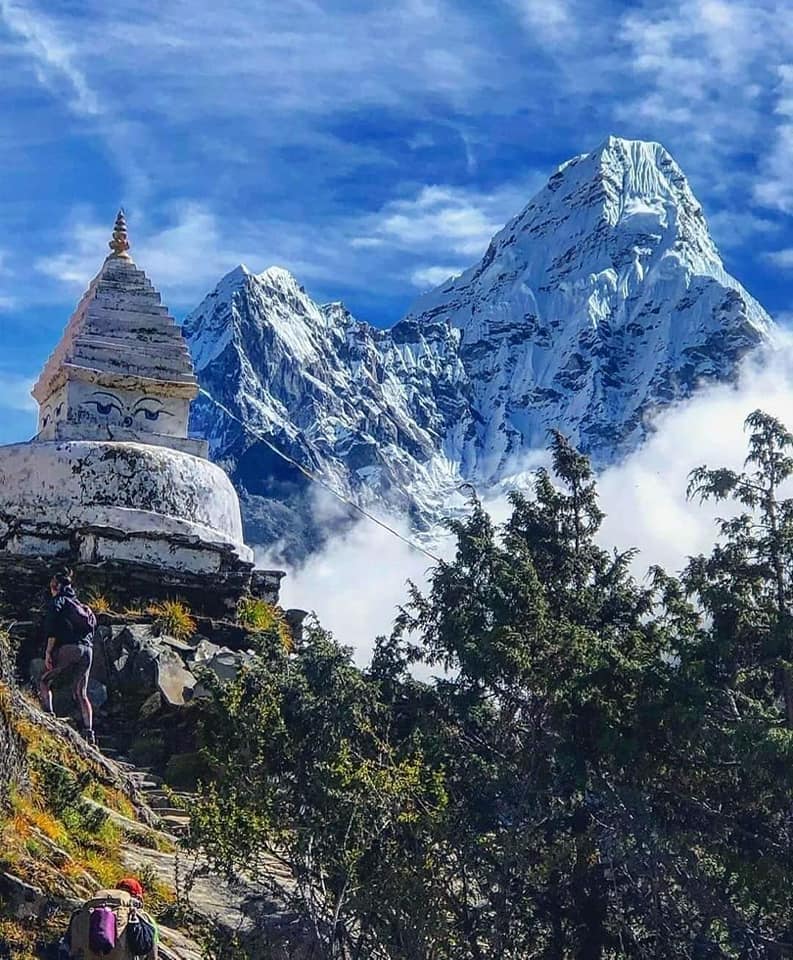
The luxury Everest Base Camp trek with helicopter return takes 9 to 11 days, costs US$1,650 to US$4,500 depending on lodge tier and group size, and cuts three days of descent by flying you from Gorak Shep (5,164m) back to Kathmandu. We run this trip in spring and autumn with premium lodge stays up to Pangboche, a dedicated guide for every four trekkers, and helicopter seats confirmed before you leave Kathmandu.
What Makes the Luxury EBC Trek Different from the Standard Route?
The trail is the same. You walk the same path through Sagarmatha National Park, cross the same suspension bridges over the Dudh Koshi River, and stand at the same Everest Base Camp at 5,364m. The difference is where you sleep, what you eat, and how you get back.
On our standard 14-day EBC trek, clients stay in basic teahouses with shared bathrooms, thin mattresses, and limited hot water. On the luxury version, we book rooms at Mountain Lodges of Nepal (formerly Yeti Mountain Home) in Lukla, Phakding, Monjo, and Namche Bazaar, and Everest Summit Lodge properties between Lukla and Mende. These lodges have heated rooms, electric blankets, en-suite bathrooms with hot showers, and dining rooms that serve fresh salads, baked goods, and proper coffee.
Above Pangboche (3,930m), luxury lodges do not exist. The altitude, supply logistics, and freezing pipes make it impractical. From Dingboche (4,410m) to Gorak Shep (5,164m), everyone stays in the same style of teahouse. We book the best available rooms at each stop, but expect basic twin beds and shared toilets at Lobuche (4,940m) and Gorak Shep. We tell every client this upfront because some agencies advertise "luxury all the way to base camp," which is not accurate.
The helicopter return replaces three days of walking. Instead of retracing your steps from Gorak Shep to Lukla, you board a helicopter the morning after your Kala Patthar sunrise hike and fly directly to Kathmandu. The flight takes roughly 45 minutes, covers the entire Khumbu Valley from above, and lands you back at your hotel by midday.
How Much Does the Luxury EBC Trek with Helicopter Return Cost?
We operate this trek from US$1,650 per person on a group-sharing basis, with the price varying by group size, season, and the level of lodge upgrades you choose. Here is a breakdown as of May 2026.
|
Cost Category |
Budget (Group Sharing) |
Mid-Range (Private) |
Premium (Full Luxury) |
|
Trek package (guide, porter, meals, lodges, permits) |
US$1,200 |
US$1,800 |
US$2,800 |
|
Helicopter return (Gorak Shep to Kathmandu, shared) |
US$450 |
US$450 |
US$900 (private) |
|
Kathmandu hotel (3 nights, 5-star) |
Included at 3-star |
US$250 |
US$450 |
|
Lukla flight (one-way, Kathmandu to Lukla) |
US$180 |
US$180 |
Helicopter both ways: US$600 |
|
Permits (Sagarmatha NP + Khumbu Pasang Lhamu) |
US$40 |
US$40 |
US$40 |
|
Total estimate per person |
US$1,650 to US$1,870 |
US$2,500 to US$2,720 |
US$4,000 to US$4,500 |
Permit costs as of May 2026: Sagarmatha National Park entry permit is NPR 3,000
(approximately US$22) per person, and the Khumbu Pasang Lhamu Rural Municipality permit is NPR 2,000 (approximately US$15) per person. A TIMS card is not required for the Everest region.
The helicopter return price has increased in 2026. Aviation fuel costs in Nepal rose sharply due to supply chain disruptions, and operators have passed this on. A shared helicopter seat from Gorak Shep to Kathmandu now runs US$400 to US$500 per person. A private charter for up to five passengers costs US$3,500 to US$4,500, which splits well if you are trekking as a family or small group.
We include all lodge bookings, three meals per day on the trail, a licensed English-speaking guide, one porter per two trekkers, the Sagarmatha National Park permit, the Khumbu Pasang Lhamu Rural Municipality permit, and airport transfers in Kathmandu. Not included: travel insurance (mandatory; must cover helicopter evacuation up to US$100,000), personal gear, alcoholic drinks, tips for guides and porters, and extra snacks or hot showers above Pangboche where lodges charge separately.
What Does the Day-by-Day Itinerary Look Like?
We run this trek over 9 days from Kathmandu to Kathmandu. Some agencies stretch it to 11 days, but we find 9 days with proper acclimatization days is the right balance for most fit adults.
|
Day |
Route |
Elevation |
Walking Time |
Overnight |
|
1 |
Fly Kathmandu to Lukla (2,840m), trek to Phakding |
2,610m |
3 hours |
Mountain Lodges of Nepal, Phakding |
|
2 |
Phakding to Namche Bazaar |
3,440m |
5 to 6 hours |
Mountain Lodges of Nepal, Namche |
|
3 |
Acclimatization day in Namche Bazaar (hike to Everest View Hotel at 3,880m) |
3,440m |
3 to 4 hours |
Mountain Lodges of Nepal, Namche |
|
4 |
Namche Bazaar to Tengboche |
3,860m |
5 hours |
Best available lodge |
|
5 |
Tengboche to Dingboche |
4,410m |
5 to 6 hours |
Best available lodge |
|
6 |
Acclimatization day in Dingboche (hike to Nangkartshang Peak at 5,083m) |
4,410m |
4 hours |
Best available lodge |
|
7 |
Dingboche to Lobuche to Gorak Shep |
5,164m |
7 to 8 hours |
Teahouse, Gorak Shep |
|
8 |
Gorak Shep to Everest Base Camp (5,364m), return to Gorak Shep |
5,164m |
6 to 7 hours |
Teahouse, Gorak Shep |
|
9 |
Early morning hike to Kala Patthar (5,644m), helicopter return to Kathmandu |
Back to Kathmandu |
2 hours hiking, 45 min flight |
Hotel in Kathmandu |
Day 3 is not optional. We schedule a full rest day at Namche Bazaar on every luxury EBC trip because this is where AMS symptoms first appear. Skipping it is the single biggest mistake we see other agencies make with their "fast" luxury treks.
Day 6 at Dingboche is equally important. The jump from 3,860m at Tengboche to 4,410m at Dingboche is significant. We send clients on a short hike up to Nangkartshang Peak (5,083m) and back, which helps the body adjust before the push to Gorak Shep the next day.
Where Do You Stay on the Luxury EBC Helicopter Trek?
The premium lodge options in the Khumbu are concentrated between Lukla (2,840m) and Pangboche (3,930m). Three lodge networks dominate this section.
Mountain Lodges of Nepal (formerly Yeti Mountain Home) operates properties in Lukla, Phakding, Monjo, Namche Bazaar, Thame, and Kongde. Their rooms have en-suite bathrooms, electric blankets, quality linens, and dining rooms that serve fresh food grown in their own greenhouses. We use their Phakding and Namche Bazaar lodges on our luxury EBC itinerary.
Everest Summit Lodges runs four properties: Lukla, Monjo, Mende, and Tashinga. The Mende lodge sits on a ridge above the main trail with clear views of Ama Dablam (6,812m) and Thamserku (6,608m). These are quieter than the Mountain Lodges of Nepal properties and suit clients who want a more peaceful experience.
Hotel Everest View in Syangboche (3,880m) is the world's highest-placed hotel and a popular stop during the Namche acclimatization day. We take clients here for lunch with a direct view of Everest, Lhotse (8,516m), and Ama Dablam.
Above Dingboche, lodge options are limited. At Lobuche (4,940m), the Eco Lodge is the best option with relatively clean rooms and a warmer dining hall. At Gorak Shep (5,164m), every lodge is basic. Expect cold rooms, no showers, and simple dal bhat. We bring extra sleeping bags rated to minus 20 Celsius for clients staying at Gorak Shep because the ones provided by lodges are often thin and damp.
When Is the Best Time for This Trek?
Two seasons work. Spring (March to May) and autumn (September to November) offer stable weather, clear skies, and reliable helicopter flying conditions.
Autumn (September to November) is our top recommendation for the luxury helicopter return trek. The monsoon clears by mid-September, skies are sharp, temperatures at base camp hover around minus 5 to minus 10 Celsius at night, and helicopter cancellations are rare. October is the busiest month on the trail, so we book luxury lodges three to four months in advance. If you want a Mountain Lodges of Nepal room in Namche during October, do not wait until August to book. They sell out.
Spring (March to May) brings warmer temperatures and rhododendron blooms below Namche. Visibility is slightly hazier than autumn, especially in April. May is quieter on the trail because most trekkers finish before the monsoon starts in early June. Helicopter reliability is good in March and April but drops in late May as pre-monsoon clouds build in the afternoons.
Winter (December to February) is possible but not ideal for the luxury helicopter version. Lodge availability above Dingboche drops because many teahouses close for the season. Temperatures at Gorak Shep can fall below minus 25 Celsius at night. Helicopter flights get cancelled more frequently due to high winds and low cloud. We do run winter EBC treks, but we recommend the standard 14-day version with a walking return so you are not stuck at Gorak Shep waiting for a helicopter that may not come for two or three days.
Monsoon (June to August) is a firm no. Trail conditions are poor. Leeches are active below Namche. Helicopter operations are unreliable. Landslides close sections of the approach road. We do not operate the luxury EBC helicopter trek during monsoon.
What Are the Common Mistakes on This Trek?
We run 15 to 20 luxury EBC helicopter return departures per season. These are the mistakes we see most often.
Booking a luxury trek with no acclimatization days. Some agencies sell a 7-day "express luxury" EBC itinerary. The math does not work. You gain over 2,500m of elevation in under a week. Without rest days at Namche (3,440m) and Dingboche (4,410m), the risk of Acute Mountain Sickness (AMS) jumps significantly. We have picked up evacuated trekkers from other agencies' express trips at Pheriche's Himalayan Rescue Association clinic more than once.
Expecting five-star lodge standards above 4,000m. The luxury zone ends near Deboche/Pangboche. From Dingboche upward, you are in basic teahouses. Clients who arrive at Gorak Shep expecting heated rooms and hot showers are disappointed. We set expectations clearly during the pre-trek briefing in Kathmandu.
Not carrying enough cash. Above Namche, there are no ATMs. Hot drinks at lodges cost NPR 300 to 600 each. A hot shower at Dingboche costs NPR 500 to 800. Wi-Fi charges NPR 500 to 1,000 per device at most lodges above 4,000m. Bring at least NPR 15,000 to 20,000 in small bills for personal extras.
Skipping travel insurance or buying a policy without helicopter evacuation coverage. Helicopter evacuation from Gorak Shep to Kathmandu on medical grounds costs US$3,000 to US$5,000. Your insurance must explicitly cover high-altitude helicopter rescue up to at least 6,000m. We check every client's policy before departure. No valid insurance, no trek.
Overpacking. Each porter carries a maximum of 25kg for two trekkers. On the luxury version, clients sometimes bring full-size suitcases expecting hotel-style baggage handling. Pack a single duffel bag under 12kg. We provide a thick down jacket and a warm sleeping bag so you do not need to bring your own.
How Does the Helicopter Return Work?
On Day 9, you wake at 4:00 AM at Gorak Shep and hike to Kala Patthar (5,644m) for sunrise. This is the best viewpoint for Everest, Nuptse (7,861m), Changtse (7,543m), and the Khumbu Icefall. You return to Gorak Shep by 8:00 AM, eat breakfast, and wait for the helicopter.
The helicopter typically arrives between 8:30 and 10:00 AM, depending on weather and air traffic. Each Eurocopter AS350 B3 carries five passengers plus the pilot. If your group is larger than five, two rotations are scheduled.
The flight follows the Khumbu Valley south. You fly directly over Lobuche, Dingboche, Tengboche Monastery, Namche Bazaar, and Lukla, seeing from the air every village you walk through. On a clear day, you can see Makalu (8,485m) to the east and Cho Oyu (8,188m) to the northwest. The helicopter may land at Lukla for a fuel stop, adding 15 minutes to the trip. Total flight time from Gorak Shep to Kathmandu is 40 to 50 minutes.
We confirm helicopter bookings with the operator at least two weeks before departure. Weather delays do happen. If the helicopter cannot fly on the scheduled morning, you wait at Gorak Shep or descend on foot to Pheriche (4,371m), where flying conditions are often better. In nine years of operating this trip, we have had helicopter delays of one day on about 10% of our autumn departures. Zero clients have been stranded for more than 24 hours.
Who Is This Trek Right For?
This is not a beginner hike. You walk 6 to 8 hours per day on steep mountain trails at elevations above 4,000m. The luxury lodges make evenings more comfortable, and the helicopter saves three days of descent, but the daily effort on the trail is identical to the standard EBC trek.
This trek works well for fit adults aged 18 to 65 who want the full EBC experience without the repetitive three-day walk back to Lukla. It is popular with professionals who have limited vacation time, couples celebrating milestones, and small family groups with teenagers (we accept trekkers aged 14 and above on this itinerary with a parent or guardian).
We recommend a minimum of 8 to 12 weeks of cardio preparation before the trek. Stair climbing, hill walking, and jogging are the most relevant exercises. If you can comfortably walk uphill for 5 hours with a 5kg daypack, you are ready.
What Gear Do You Need?
We provide a down jacket (rated to minus 20 Celsius), a sleeping bag (rated to minus 15 Celsius), and a waterproof duffel bag. You bring your own trekking boots (broken in, ankle-height, waterproof), base layers, a warm fleece, rain shell, trekking poles, headlamp, sunscreen (SPF 50+), sunglasses with UV protection, and a 1-liter water bottle.
Skip cotton. Everything from socks to base layers should be merino wool or synthetic. Cotton holds moisture and drops your body temperature fast above 4,000m. We see this mistake every season, usually with clients who packed for the lodge life and forgot they are spending 7 hours a day on a cold, exposed trail.
Trekking poles are not optional above Namche. The trail between Namche and Tengboche has steep descents on loose stone. Between Dingboche and Lobuche, the moraine trail is uneven and slippery. Poles reduce knee strain significantly, especially for clients over 40.
Frequently Asked Questions
Is the helicopter return safe?
Yes. the operators we work with fly Eurocopter AS350 B3 helicopters, which are rated for high-altitude operations up to 7,000m. Pilots flying in the Khumbu must hold a specific mountain flying certification. Weather is the only variable. If conditions are marginal, the pilot will delay, not risk the flight. We have never had a safety incident on a helicopter return in our operations.
Can I fly both ways by helicopter instead of trekking to Lukla?
Yes. We offer a helicopter flight from Kathmandu directly to Lukla on Day 1, skipping the fixed-wing flight. This avoids the 5 to 6 hour drive to Ramechhap (Manthali), which is now the departure point for many Lukla flights since domestic flights shifted from Tribhuvan International Airport. The helicopter from Kathmandu to Lukla costs US$400 to US$600 per person on a shared basis and takes 35 minutes.
Do I need a guide on this trek?
Yes. Since 2023, Nepal requires all trekkers in national parks and conservation areas to trek with a licensed guide. Solo trekking without a guide is not permitted in Sagarmatha National Park. We assign one government-licensed guide per four trekkers on our luxury trips.
What happens if I get altitude sickness?
Our guides carry pulse oximeters and check your blood oxygen levels every evening above 3,440m. If your SpO2 drops below 75% or you show symptoms of HACE (High Altitude Cerebral Edema) or HAPE (High Altitude Pulmonary Edema), we descend immediately. The Himalayan Rescue Association operates a medical clinic at Pheriche (4,371m) staffed by volunteer doctors during spring and autumn seasons. If descent is not sufficient, we arrange an emergency helicopter evacuation. This is why travel insurance with helicopter evacuation coverage is mandatory.
Can I extend the trek to include Gokyo Lakes or Island Peak?
Yes. We offer a combined Luxury EBC with Gokyo Lakes trek (add 3 to 4 days) and an EBC with Island Peak Climbing package (17 days, from US$2,390). Both can include the helicopter return. Contact us for a custom itinerary.
What is the weight limit for the helicopter?
Each passenger is limited to approximately 10 to 15kg of luggage on the helicopter. Your main duffel goes with the porter who walks back to Lukla, and we arrange it to be shipped to your Kathmandu hotel. Bring a daypack with essentials for the helicopter flight.
How far in advance should I book?
For October departures, book 4 to 6 months ahead. Mountain Lodges of Nepal and Everest Summit Lodge properties fill up fast in peak season. For spring departures (March to April), 3 months is usually sufficient. We require a 25% deposit to confirm your booking, with the balance due 30 days before departure.
Your Next Step
See our complete 9-day Luxury Everest Base Camp Trek with Helicopter Return itinerary at worldexpeditionnepal.com/trip/everest-base-camp-trek-with-helicopter-return .The page includes the full day-by-day schedule, what is included, and current pricing for 2026 and 2027 departures.
If you want a custom itinerary, a private departure for your group, or you want to combine this trek with Gokyo Lakes or Island Peak, message Sujan directly on WhatsApp at wa.me/+9779851212358 .We respond within 2 hours during Nepal business hours.
