
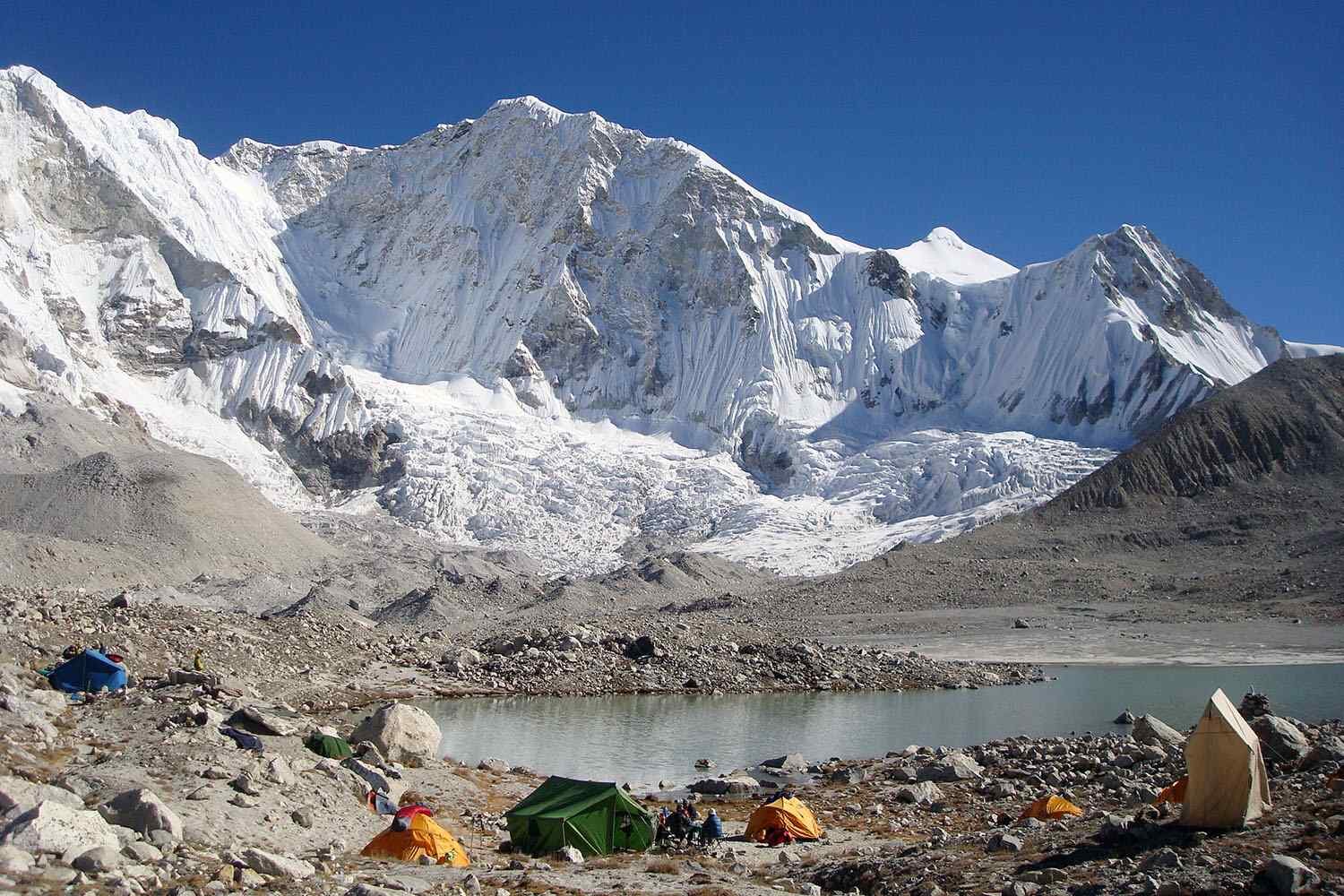
The Baruntse Expedition is a challenging mountaineering endeavor situated in the Khumbu region of Nepal. Standing at 7,129 meters, it requires exceptional mountaineering skills and prior experience at high altitudes. The climb typically follows the South Ridge route, involving steep slopes, icefalls, and crevasses, with climbers establishing multiple high camps. The expedition duration is around 4-6 weeks, and physical fitness and mountaineering training are crucial for success. Hiring experienced guides and obtaining climbing permits are essential, and the climbing season is usually during the spring and autumn months. The breathtaking views of nearby Himalayan giants, including Everest, Lhotse, and Makalu, make the journey even more rewarding for those who brave the challenges of Baruntse.
Khumbu region is affluent in mountains that range from trekkers peaks of 6,000 metres, climbing peaks of 7,000 metres, and the world's tallest peaks above 8,000 metres. One among such, Baruntse Peak, at 7,129 metres, sits in the heart of Makalu National Park. In the middle of Everest at 8,848 metres, Makalu at 8,481 metres, and Cho Oyu at 8,201 metres, Baruntse scintillates.
At an elevation of 7,129 metres, the Baruntse peak in the Khumbu region has its charm. Amidst the tallest 8000-metre summits, three elegant glaciers of Khumbu surround Baruntse. Henku Glacier, Barun Glacier, and Imja Tse lie to the South, East, and North of Baruntse Peak.
More intermediate climbers with 6000 metres of peak climbing experience want to scale Baruntse peak to improve their climbing resume. Often, many mid-level climbers take this expedition as preparations to climb 8,000 metres mountains. Thus, its vertical four ridges and snow-filled terrain are best for excelling alpine techniques. Baruntse Peak also has more success climbing numbers than adjacent peaks of the Khumbu region. It is also why more and more climbers approach this peak every climbing season.
Since Baruntse sits amid Everest, Makalu, Cho Oyu, Nuptse, and Lhotse, all these peaks are visually elegant from the summit. On a clear weather day with stable temperature, all these peaks appear close to Baruntse Summit.
More climbers approach Baruntse summit from South-East Ridge. But, it becomes arduous due to steep vertical ridges over 50 degrees. Also, many snow-covered ice cliffs on this face are prone to avalanches. Hence, more climbers summit Baruntse from South East Ridge during Spring. But, there have also been some successful summit records of climbing Baruntse Peak during Autumn.
The straightforward climb from Baruntse Peak base camp to the summit has two to three High Camps. These camps are best for acclimatising and routine climbs back and forth. The back and forth climb to Camp I at 6,000 metres and Camp II at 6,450 metres help acclimatise and build confidence in climbing.
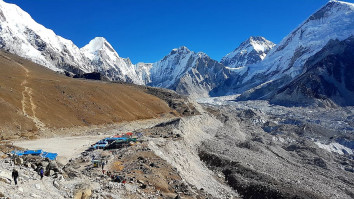
The broad landscape of the Baruntse base camp is beautiful. Henku Glacier, Cho, and Imja Tse glaciers make the place inspiring. Climbers prefer West col from Baruntse Peak base camp via South-East Ridge. The AD grade of the climb makes the climb of 50 degrees vertical West Col arduous. Camp I of Baruntse peak sits on a glacial plateau.
Fixed rope walking comes as we start ascending to Camp II. The climb is shorter, but it also has a 45-degree steep icy wall. Ice shoulder's presence in huge volume makes the summit push cumbersome. This shoulder of ice and snow is around 7,000 metres from the peak. Our climbing guides will guide you with the proper information to climb with a fixed rope. As we reach Baruntse Summit, at 7,129 metres, the broad ridges become narrow.
The serene view of Everest, Makalu, Cho Oyu, Ama Dablam, Lhotse, and Nuptse makes the arduous climb rewarding. The summit push is nearly 12 hours long. Thus, physical endurance alongside climbing techniques is a must. After some time at the summit, we'll return to base camp the same day.
While returning to Lukla, we'll cross Amphu Lapcha Pass. It will also add an extra adventure to our month-long Baruntse Peak expedition.
A day before we leave Kathmandu, we'll have an expedition briefing by our expedition manager. Baruntse Peak expedition then begins with a flight from Kathmandu to Lukla. Our logistic team, porters, and guides will be taking care of the expedition team.
We'll hike from Lukla to Chutanga at 3,060 metres, Thuli Kharka at 3,900 metres, Kothe at 4,095 metres, Thangnak at 4,350 metres, and Khare at 5,054 metres. Here, we'll have our first acclimatisation rest.
From Khare to Baruntse Base Camp and in base camp during climbing, we'll be accommodating in camping style. There'll be 15 or more days for the climbing period. Also, there will be some buffer days for weather and acclimatisation. We'll also climb and overnight at Mera Peak base camp for acclimatisation.
From Baruntse Base Camp, we'll hike to Baruntse Camp I, Camp II, and the summit. We'll then return to Lukla by crossing Amphu Labtsa Pass.
We at World Expedition Nepal have fixed departures for Baruntse Expedition for Autumn 2022 and Spring 2023. Be in touch with us to know more about the availability and cost of this expedition. Book your trip with us and experience the thrill of climbing this 7,000 metres peak.
We'll be accommodating in tea houses and tented camps throughout the Baruntse Expedition. Until Khare at 5,054 metres, we'll be staying at tea houses. The tea houses offer minimal accommodation services. We'll make the best available accommodation services for you.
From Khamedingma to Baruntse base camp, and till Thangnak, we'll be staying camping style. Our logistic team and kitchen staff will prepare meals for us. Also, we'll have comfortable overnights in tented camps
Baruntse Peak climbing is arduous, and hence, it is a challenging grade peak. The steep ridges, fixed-line climb, and abseiling climbing techniques make it a technical mountain to climb.
Those, who have a couple 6,000 metres peak climbing experience, can summit Baruntse comfortably. Also, intermediate climbers find this peak a perfect place to exercise their climbing techniques. But, for aspiring climbers, Baruntse is not an ideal peak. On top, physical fitness is also a must to scale this peak.
World Expedition Nepal focuses on and promotes peak climbing and expeditions in Nepal. We have been providing tour services since 2017 by registered and licensed under Nepal Government. In the Everest and Makalu region, we'll make sure that you'll have complete joy alongside the adventure of high-altitude climbing.
Our professional and experienced guides will ensure your utmost comfort and safety on Baruntse Peak climbing. We'll make this tour an unforgettable experience for you. Also, the health and safety of our clients is our primary motto. Our guides for these expeditions have mountain skills certification. They come with expertise in mountain medicine, first aid, and rescue operations.
Upon arrival at Tribhuvan International Airport in Kathmandu, you will go through immigration and customs formalities. After collecting your baggage, you will exit the airport terminal, where you will be warmly greeted by your expedition team or a representative from the World Expedition Nepal.
The representative will have a signboard or a placard with your name or the name of the world expedition Nepal for easy identification. They will welcome you to Nepal and provide any necessary information about your upcoming Baruntse Expedition.
From the airport, you will be transferred to your pre-arranged hotel in Kathmandu. The transfer from the airport to your hotel takes approximately 30 minutes to an hour, depending on traffic conditions.
During the transfer, you will get your first glimpse of Kathmandu, a bustling city with a rich cultural heritage and a unique blend of ancient traditions and modern developments.
Once you reach your hotel, the expedition team or the World Expedition Nepal's representative will assist you with the check-in process. They will also provide you with a brief orientation about the expedition, including the itinerary, necessary permits, and any last-minute preparations.
After checking into your room and getting some rest, you can spend the rest of the day at your leisure. You may explore the nearby surroundings, enjoy local cuisine at a restaurant, or simply relax and acclimatize to the altitude.
In the evening, there might be a welcome dinner organized by theWorld Expedition Nepal. This dinner is an excellent opportunity to meet your fellow expedition members, guides, and support staff and to further discuss the upcoming adventure.
Before going to bed, it is recommended to take some time to double-check your equipment and ensure that you have all the necessary gear for the expedition. If you have any questions or need additional items, the expedition team or the trekking agency can assist you with equipment rentals or purchases.
Overnight stay in Kathmandu.
Today, we focus on these things so that we successfully complete our expedition.
Permit Issue:
Before embarking on the Baruntse Expedition, you need to obtain several permits from the Nepalese authorities. The primary permits required for climbing Baruntse include:
Nepal Mountaineering Association (NMA) Climbing Permit: This permit is issued by the Nepal Mountaineering Association and is mandatory for all climbers attempting Baruntse.
Sagarmatha National Park Entry Permit: Baruntse lies within the Sagarmatha National Park, so you need this permit to enter the park.
Preparation:
Preparing for the Baruntse Expedition requires careful planning and physical training. Here are some essential aspects of preparation:
Physical Fitness: The expedition demands a high level of physical fitness and endurance. Engage in cardiovascular exercises, strength training, and endurance activities to prepare your body for the rigors of high-altitude climbing.
Technical Training: Ensure you have prior experience in mountaineering and high-altitude climbing. If needed, join training courses to learn technical skills like ice climbing, crevasse rescue, and using mountaineering equipment.
Gear and Equipment: Gather all necessary gear and equipment, including clothing, climbing gear, sleeping bags, trekking poles, and high-altitude boots. Double-check that all items are in good condition.
Acclimatization: Plan for proper acclimatization by spending time at different altitudes to allow your body to adjust to reduced oxygen levels gradually.
Last-Minute Shopping:
Before leaving Kathmandu for the expedition, you may need to do some last-minute shopping to ensure you have everything you need. Some items you might want to purchase include energy bars, snacks, toiletries, batteries, and other personal items. Additionally, if there are any specific items you couldn't bring from home, you can find them in the trekking and mountaineering shops in Kathmandu.
Briefing:
Before starting the expedition, there will be a comprehensive briefing organized by the expedition team or the trekking agency. During the briefing, you will receive essential information about the following:
Expedition Itinerary: A detailed overview of the day-by-day plan, including trekking routes, acclimatization days, and the summit attempt schedule.
Safety Measures: Information on safety protocols, emergency procedures, and high-altitude health issues.
Climbing Techniques: A review of specific climbing techniques relevant to the Baruntse route.
Team Roles: Roles and responsibilities of expedition members, guides, and support staff.
Weather Update: Current weather conditions and forecasts for the expedition period.
Communication: Communication systems and protocols during the expedition.
Permits: Confirmation and review of all necessary permits.
Q&A: Time for participants to ask any questions or seek clarifications.
The briefing will provide you with a clear understanding of what to expect during the expedition, and it allows you to voice any concerns or seek additional information.
After having Tasty meal in the evening you will have to take rest and get ready for trip.
On the second day of the Baruntse Expedition, we will begin our adventure by flying from Kathmandu to Lukla and then trekking towards Chhuthang.
Early Morning Flight to Lukla: Start our day early with a thrilling flight from Kathmandu to Lukla. The flight offers mesmerizing views of the Himalayan mountains and takes about 30 to 40 minutes.
Arrival in Lukla: After landing at Lukla's Tenzing-Hillary Airport, we will meet our expedition team and trekking guides who will be accompanying us throughout the journey. Lukla is a bustling town with teahouses, shops, and lodges, serving as a popular starting point for trekkers and climbers.
Trek to Chhuthang: From Lukla, we will begin our trek towards Chhuthang. The trail initially descends to the Dudh Koshi River before ascending through beautiful pine and rhododendron forests. We will cross several suspension bridges and pass through quaint Sherpa villages along the way.
Pass Through Ghat and Phakding: As we trek, we will pass through villages like Ghat and Phakding. These charming settlements provide opportunities to rest, enjoy local cuisine, and immerse yourself in the serene surroundings.
Ascend to Chhuthang: Continuing our ascent, we will reach Chhuthang, which is situated at an altitude of 4,100 meters (13,451 feet). The trek involves gaining elevation, and we may feel the effects of higher altitude. Make sure to maintain a steady pace, stay hydrated, and listen to our body.
Overnight in Chhuthang: After a day of exciting trekking, we will arrive at Chhuthang. The village offers stunning views of the surrounding mountains and provides a peaceful setting for acclimatization and preparation for the challenges ahead. Enjoy the tranquility of the Himalayas and relax in one of the lodges or teahouses.
On this day, we will take a well-deserved rest and acclimatization day in Chhuthang. Acclimatization is essential to allow our body to adjust to the higher altitude and reduced oxygen levels, reducing the risk of altitude-related illnesses as we proceed further on the Baruntse Expedition.
During the acclimatization day, we have the following options:
Short Hike: Consider taking a short hike to a nearby vantage point or hilltop. This gentle walk will help our body adjust to higher altitudes while allowing us to enjoy breathtaking views of the surrounding mountains and landscapes.
Hydration and Rest: Rest is vital for acclimatization, so spend the day relaxing at our accommodation. Drink plenty of water to stay hydrated and avoid alcohol and strenuous activities.
Altitude Training: Our expedition team may organize altitude training sessions to familiarize us with the use of climbing equipment, techniques, and safety measures required for the upcoming climbs.
Explore Chhuthang: Take the opportunity to explore the local culture and lifestyle of the people living in the area. Engaging with the locals and understanding their way of life can add depth to our expedition experience.
Health Check: Use the day to monitor your health and communicate with our expedition leader or medical staff if we experience any signs of altitude sickness. It's crucial to recognize symptoms like headaches, dizziness, or shortness of breath and address them promptly.
Team Briefing: Our expedition leader or guides may conduct a team briefing to discuss the upcoming stages of the expedition, safety protocols, and further plans. This will ensure that everyone is well-informed and prepared for the challenges ahead.
After having delicious dinner, we stay overnight in Chuthang.
On this day, we will resume our trek from Chhuthang towards Tuli Kharka, crossing the Zatrawala Pass along the way.
Start of the Trek: After a day of acclimatization in Chhuthang, we will set off early in the morning to maximize daylight hours for the trek. The trail begins with a gradual ascent through rocky terrain and alpine meadows.
Zatrawala Pass (4,600 meters): The highlight of the day is crossing the Zatrawala Pass, which stands at an altitude of 4,600 meters (15,091 feet). The pass offers panoramic views of the surrounding mountains, including views of Mera Peak and Chamlang Peak.
Descent to Tuli Kharka: After enjoying the breathtaking scenery from the pass, we will descend towards Tuli Kharka. The trail leads through rhododendron forests and offers chances to spot local wildlife.
Tuli Kharka: After 5-6 hour of trek wewill arrive at Tuli Kharka, we will be greeted by the serene ambiance of the alpine meadows. Tuli Kharka is a beautiful grazing area with yak herders' huts. The place provides a picturesque backdrop for our overnight stay.
Rest and Enjoyment: Upon reaching Tuli Kharka, we will have ample time to rest and rejuvenate. The tranquil atmosphere and breathtaking landscapes offer a perfect setting to unwind after a day of trekking.
Interaction with Locals: Take the opportunity to interact with the locals, learn about their traditional way of life, and experience their warm hospitality. The cultural exchange can enrich our understanding of the local culture and customs.
Overnight at Tuli Kharka: We will spend the night in one of the teahouses or lodges at Tuli Kharka, enjoying a warm meal and a comfortable rest to prepare for the next day's trekking challenges.
After a restful night at Tuli Kharka, we will continue our Baruntse Expedition by trekking towards Kothe, a picturesque settlement nestled amidst the enchanting landscapes of the Himalayas.
Trek Commencement: Embark on our trek after breakfast, and bid farewell to the serene pastures of Thuli Kharka. The trail initially descends through dense forests, following the Hinku River. Be prepared for some uphill sections as we trek along the riverbank.
Pass Through Gondishung: Along the way, we will pass through the small settlement of Gondishung, where we can visit the Gompa (monastery) that houses a traditional yet significant relic - a sacred yeti scalp. The Sherpa locals believe it to have religious importance and historical significance.we will stop in the trek house for lunch. We'll take some rest and continue our trek.
Views of Mera Peak: During the trek, we will also catch glimpses of Mera Peak, one of the famous trekking peaks in Nepal, standing tall at an elevation of 6,476 meters (21,247 feet). The views of Mera Peak and the surrounding landscapes add to the awe-inspiring beauty of the region.
Ascend to Kothe: As we progress further, the trail will lead us through lush rhododendron and bamboo forests. We will gradually ascend to Kothe, which is located at an altitude of 4,182 meters (13,719 feet). Kothe is a quaint village, offering a peaceful and serene environment, perfect for trekkers seeking tranquility amidst nature's bounty.
Arrival at Kothe: Upon reaching Kothe, you can rest and recharge at one of the teahouses or lodges. Enjoy the evening by exploring the surroundings or engaging in conversations with fellow trekkers and the friendly locals. The village's cozy ambiance provides a relaxing atmosphere for your overnight stay.
Overnight stay in Kothe.
On this day, we will continue our trek in the Hinku Valley, ascending further to the village of Thangnak. The journey from Kothe to Thangnak offers stunning views of the surrounding peaks and takes us deeper into the heart of the Himalayas.
Departure from Kothe:
After breakfast, bid farewell to the peaceful village of Kothe and start our trek towards Thangnak. The trail leads us along the Hinku River, which is fed by the glaciers of the towering peaks above.
Enter the Hinku Valley:
As we ascend, we will notice the landscape changing, and the vegetation becomes sparser. The Hinku Valley is known for its breathtaking beauty and rugged terrain, making the trek even more adventurous.
Views of Mera Peak and Kusum Kanguru:
During the trek, we will be treated to stunning views of Mera Peak and Kusum Kanguru, two of the prominent peaks in the region. The snow-capped mountains and glaciers add to the surreal atmosphere of the trek.
Pass Through Dense Forests: The trail winds through dense rhododendron and juniper forests, providing occasional patches of shade and a peaceful environment as we make our way towards Thangnak.
Arrival in Thangnak:
After a fulfilling trek of around 6 to 7 hours, we will arrive at Thangnak. The village is nestled in the valley, surrounded by towering peaks, and serves as a popular stopover for trekkers and climbers on their way to Mera Peak and Baruntse.
Rest and Acclimatization:
Thangnak is situated at a higher altitude, so we will spend the rest of the day acclimatizing to the altitude. Proper acclimatization is essential for our body to adjust to the increasing elevation and reduced oxygen levels, preparing us for the further ascent.
Enjoy the Scenery:
Take some time to relax and enjoy the breathtaking scenery that Thangnak has to offer. The village's serene and remote setting amidst the mountains provides an excellent opportunity to immerse yourself in the tranquility of the Himalayas.
Overnight in Thangnak:
We will spend the night at one of the teahouses or lodges in Thangnak, enjoying a warm meal and a cozy rest, ready for the upcoming days of the expedition.
On this day, we will continue our journey deeper into the Hinku Valley, hiking from Thangnak to Khare. The trek to Khare offers mesmerizing views of the surrounding peaks and glaciers, and it brings us closer to the base camp of Baruntse.
Overnight in Khare: We will spend the night at one of the teahouses or lodges in Khare, enjoying a warm meal and a comfortable rest, gearing up for the next phase of the Baruntse Expedition - the ascent to the base camp of Baruntse.
On this day, we will take a much-needed acclimatization day in Khare. Acclimatization is a critical part of the expedition, as it allows our body to adjust to the high altitude, reducing the risk of altitude-related illnesses and preparing us for the challenging ascent to the Baruntse Base Camp.
During the acclimatization day, you have the following options:
Short Hike: Consider taking a short hike to a nearby vantage point or hilltop. This gentle walk will help your body adjust to the higher altitude while allowing us to enjoy breathtaking views of the surrounding mountains and glaciers.
Climbing Practice: Use the day for climbing practice and familiarize yourself with the use of mountaineering equipment, such as crampons, ice axes, and ropes. Our expedition leader and guides may provide instruction on climbing techniques and safety measures.
Health Check: Use the day to monitor our health and communicate with our expedition leader or medical staff if we experience any signs of altitude sickness. It's essential to recognize symptoms like headaches, dizziness, or shortness of breath and address them promptly.
Rest and Hydration: Rest and stay hydrated throughout the day. Proper hydration is crucial at high altitudes to prevent dehydration and minimize the risk of altitude-related issues.
Team Bonding: Take the opportunity to bond with our expedition team members and enjoy the camaraderie of the group. Team spirit and support are essential for a successful and enjoyable expedition.
Weather and Route Update: Our expedition leader may provide updates on weather conditions and review the upcoming itinerary, ensuring that everyone is well-informed and prepared for the next stages of the expedition.
Overnight stay in Khare.
On this day, we will continue our expedition towards the Mera La Pass, a significant milestone on the way to the Baruntse Base Camp. The trek to Mera La Pass offers stunning views of the surrounding peaks and glaciers, showcasing the breathtaking beauty of the Himalayas.
Departure from Khare: After a good rest and acclimatization in Khare, we will set off early in the morning to make the most of the daylight hours. The trail leads us along the Hinku Valley, and we will gradually ascend towards the Mera La Pass.
Ascend through the Mera Glacier: As we trek, we will enter the Mera Glacier, an impressive icy expanse that adds to the adventurous spirit of the expedition. We will navigate through crevasses and ice formations, with our guides providing the necessary assistance and ensuring safety.
Views of Chamlang Peak and Baruntse: During the ascent to the Mera La Pass, we will be rewarded with breathtaking views of Chamlang Peak and Baruntse. These majestic peaks stand tall in the region, and their presence adds to the sense of awe and wonder during the trek.
Mera La Pass (5,415 meters): After several hours of trekking, we will reach the Mera La Pass, situated at an altitude of 5,415 meters (17,766 feet). The pass offers panoramic views of the surrounding mountains, including the Everest range and many other prominent peaks.
Rest and Photography: Take some time to rest and enjoy the scenic beauty of the pass. The high vantage point provides an excellent opportunity for photography, capturing the stunning landscapes and the sense of achievement from reaching this significant milestone.
Safety Precautions: While at the pass, our expedition leader and guides will remind the team of safety precautions, as well as the importance of staying together and following the established protocols during the expedition.
Descent to Khare: After spending some time at the Mera La Pass, we will begin our descent back to Khare. The return journey allows us to retrace the steps taken earlier, giving us a different perspective of the landscape.
Overnight in Khare: Upon arriving back in Khare, you will spend the night at one of the teahouses or lodges, enjoying a warm meal and a well-deserved rest. The day's trek to Mera La Pass will have further prepared us for the ascent towards the Baruntse Base Camp in the coming days.
On this day, we will continue our expedition by trekking to Seto Pokhari, a pristine glacial lake nestled amidst the high-altitude terrain. The trek to Seto Pokhari offers breathtaking views of the surrounding peaks and glaciers, making it a rewarding and memorable experience.
Departure from Khare: After breakfast in Khare, we will begin our trek towards Seto Pokhari. The trail leads us through rugged terrain and rocky paths as we gain elevation.
Ascend towards Seto Pokhari: As we trek, we will gradually ascend towards Seto Pokhari. The landscape becomes more rugged and barren, with snow-capped peaks visible in the distance.
Views of Baruntse and Mera Peaks: During the trek, we will be treated to stunning views of Baruntse and Mera Peaks. These majestic peaks dominate the skyline and serve as a constant reminder of the challenges that lie ahead.
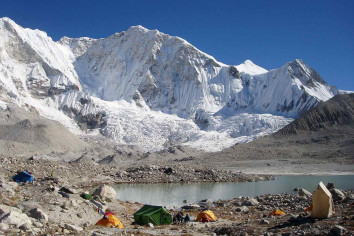
Seto Pokhari (White Lake): After 5-6 hours of trekking, we will arrive at Seto Pokhari, also known as the White Lake. The glacial lake is surrounded by rocky hills and towering mountains, creating a picturesque setting.
Rest and Reflection: Take some time to rest and reflect by the shores of Seto Pokhari. The tranquil ambiance and the serene beauty of the lake offer a perfect opportunity for contemplation and enjoying the solitude of the Himalayas.
Acclimatization: Seto Pokhari is located at a high altitude, and spending time here contributes to your acclimatization process, preparing you for the further ascent towards the Baruntse Base Camp.
Team Bonding and Expedition Preparations: The evening at Seto Pokhari is an excellent time for team bonding and expedition preparations. Our expedition leader and guides may conduct a team meeting to discuss the next stages of the journey and reinforce safety protocols.
Overnight at Seto Pokhari: We will spend the night in tents or temporary camps set up near Seto Pokhari. Sleeping amidst the pristine mountain environment under the starry skies is a unique experience that enhances our connection with nature.
On this day, we will embark on the final leg of our journey towards the Baruntse Base Camp. The trek from Seto Pokhari to the base camp is a challenging yet exciting phase, bringing us closer to the ultimate goal of climbing Baruntse.
Departure from Seto Pokhari: After breakfast and packing up our camp, we will set off towards the Baruntse Base Camp. The trail leads us through rocky terrain and moraines, and it involves significant elevation gain.
Ascend through the Amphu Labtsa Glacier: As we trek, we will navigate through the Amphu Labtsa Glacier, a massive ice formation that requires careful negotiation. Our expedition guides will ensure safety and provide guidance during this part of the journey.
Views of the South Face of Baruntse: During the ascent, we will be rewarded with breathtaking views of the impressive South Face of Baruntse. The sight of the towering peak is both awe-inspiring and motivating as we approach the base camp.
Baruntse Base Camp (5,250 meters / 17,220 feet): After 5-6 hours of trekking, we will reach the Baruntse Base Camp. This is where we and our expedition team will set up our base for the upcoming summit attempt. The base camp provides essential facilities and a comfortable environment for rest and preparation.
Set Up Camp and Rest: Upon arriving at the base camp, our team will set up tents and establish the necessary facilities. Rest and relaxation are crucial at this stage to allow our body to recover from the trek and acclimatize to the high altitude.
Expedition Preparation: The day will be dedicated to expedition preparation and final briefings. Our expedition leader and guides will conduct a comprehensive briefing, discussing the climbing route, safety measures, and the summit attempt schedule.
High Camp Planning: Our team will also plan for setting up high camps at strategic locations on the mountain. These high camps will serve as acclimatization points and staging areas for the summit push.
Enjoy the Surroundings: Take some time to soak in the magnificent surroundings of the Baruntse Base Camp. The panoramic views of the surrounding peaks and glaciers create an inspiring atmosphere, motivating us for the challenging days ahead.
Overnight at Baruntse Base Camp: We will spend the night at the Baruntse Base Camp, resting in our tents and preparing mentally and physically for the exciting days of climbing ahead.
Mount Baruntse is a highly technical and challenging endeavor, and summit attempts should only be made with proper training, experience, and under the guidance of certified mountain guides.Basically it takes 12 days to complete starting from/ end to Base Camp. The following is an outline of the summit day and the return to Base Camp:
Summit Day:
Early Start: Summit day usually starts very early in the morning, often before dawn, to take advantage of stable weather conditions and minimize the time spent on the more dangerous sections of the climb.
Departure from Base Camp: After a quick breakfast and final gear check, the climbing team will leave the Baruntse Base Camp and begin the ascent.
Climbing Route: The exact climbing route may vary depending on the chosen itinerary, but it typically involves ascending a series of ice and snow slopes, negotiating crevasses, and possibly passing through steep sections.
Fixed Rope Sections: Some parts of the route may be equipped with fixed ropes, which climbers can clip into for added safety during challenging sections.
Technical Climbing: The summit push may involve technical climbing, including the use of ice axes, crampons, and rope work. Climbers should be skilled in various mountaineering techniques.
Altitude Challenges: As climbers ascend to higher altitudes, the reduced oxygen levels pose significant challenges, and climbers need to move carefully and methodically to avoid altitude sickness and exhaustion.
Summit Success: If all goes well, the climbers will reach the summit of Mount Baruntse, where they can celebrate their achievement and enjoy breathtaking views of the surrounding peaks and landscapes.
Return to Base Camp:
Descent: After spending some time at the summit to celebrate and take pictures, the climbers will begin their descent back to the high camp.
High Camp: Once back at the high camp, climbers will rest, rehydrate, and continue descending towards the Baruntse Base Camp.
Return Journey: The return journey can be physically demanding, as climbers have already expended significant energy on the ascent. Proper pacing and rest stops are crucial during the descent.
Back to Base Camp: Finally, the climbing team will arrive back at the Baruntse Base Camp, where they can rest, recover, and enjoy a well-deserved celebration.
After successfully summiting Mount Baruntse and descending back to the Baruntse Base Camp, the return journey continues with the goal of heading back to Seto Pokhari. The return trek from the base camp to Seto Pokhari involves retracing the steps taken during the ascent, providing climbers with an opportunity to revisit familiar terrain and enjoy the beauty of the Himalayas once more.
The return journey typically follows the following steps:
Departure from Base Camp: After a well-deserved rest and celebration at the base camp, the climbers and the expedition team will prepare to depart for Seto Pokhari.
Packing and Cleaning: Before leaving the base camp, the team will ensure that all waste and belongings are packed up, and the campsite is left clean and environmentally friendly, adhering to Leave No Trace principles.
Descent to Seto Pokhari: The descent from the base camp to Seto Pokhari is a gradual one, with the team carefully navigating through rocky terrain, moraines, and glacial sections.
Views and Reflection: The return journey offers climbers the chance to relish the breathtaking views once again and reflect on the accomplishment of summiting Mount Baruntse.
Arrival at Seto Pokhari: After 5-6 hours of trekking, we will reach Seto Pokhari, where we will spend the night in tents or temporary camps near the glacial lake.
Enjoy the Serenity: Seto Pokhari's serene and pristine environment provides a tranquil atmosphere for trekkers and climbers to unwind, relax, and absorb the beauty of the surroundings.
Overnight stay in Seto Pokhari.
After departing from Seto Pokhari, the trek continues with the goal of reaching Mera La Pass. This part of the journey involves descending from Seto Pokhari and crossing back through the Amphu Labtsa Glacier before reaching the pass. The trek follows the following steps:
Departure from Seto Pokhari: After spending a refreshing time at Seto Pokhari, we will leave the campsite and begin the trek towards Mera La Pass.
Descent through Amphu Labtsa Glacier: The initial part of the trek involves descending through the rugged and icy terrain of the Amphu Labtsa Glacier. Climbers must exercise caution and use proper equipment to navigate safely through this glacier.
Ascend towards Mera La Pass: After crossing the glacier, the trek continues with an ascent towards Mera La Pass. The trail leads through rocky terrain and may involve some sections of scrambling.
Views of Baruntse and Mera Peaks: During the ascent towards Mera La Pass, climbers are rewarded with breathtaking views of Baruntse and Mera Peaks once again. These majestic peaks serve as reminders of the mountaineering accomplishments and the beauty of the Himalayas.
Mera La Pass (5,415 meters / 17,766 feet): After 5-6 hours of trekking, the team reaches Mera La Pass. This pass offers magnificent panoramic views of the surrounding mountains, glaciers, and valleys.
Rest and Photography: At Mera La Pass, climbers take the opportunity to rest, rehydrate, and capture the stunning scenery with their cameras. The pass provides an excellent vantage point for photographs and a sense of accomplishment.
Overnight stay in Mera La Pass.
After crossing Mera La Pass, the trek continues with the goal of returning to Thangnak. The descent from Mera La Pass to Thangnak involves retracing the steps taken during the ascent and descending through the beautiful Hinku Valley. The trek follows the following steps:
Departure from Mera La Pass: After spending some time at Mera La Pass, we will depart and begin the descent towards Thangnak.
Descending through Rocky Terrain: The initial part of the descent involves trekking through rocky and sometimes steep terrain. We must be cautious while descending to ensure their safety.
Views of Mera Peak: During the trek back to Thangnak, We will have opportunities to enjoy stunning views of Mera Peak once again. The sight of the magnificent peak adds to the beauty of the surroundings.
Enter the Hinku Valley: As we descends further, we will enter the picturesque Hinku Valley. The valley is known for its lush vegetation, rhododendron forests, and stunning landscapes.
Cross through Gondishung: Along the way, we will pass through the small settlement of Gondishung once again. We can revisit the Gompa (monastery) that houses the sacred yeti scalp and take a moment to appreciate its significance.
Arrival in Thangnak: After several hours of trekking, we will arrive back in Thangnak. The familiar village serves as a welcoming base for trekkers and climbers in the region.
Rest and Relaxation: Upon reaching Thangnak, we will have the chance to rest and relax, enjoying the tranquility and natural beauty of the village.
Overnight in Thangnak: We will spend the night in one of the teahouses or lodges in Thangnak, enjoying a warm meal and a comfortable rest.
After leaving Thangnak, the trek continues with the goal of returning to Kothe. The descent from Thangnak to Kothe involves trekking through the Hinku Valley, passing through lush forests, and enjoying the natural beauty of the region. The trek follows the following steps:
Departure from Thangnak: After breakfast,we will depart from Thangnak and begin the descent towards Kothe.
Descending through the Hinku Valley: The trail leads through the scenic Hinku Valley, which is characterized by dense rhododendron and juniper forests. The descent is gradual, providing an enjoyable trekking experience.
Views of Mera Peak: As the team descends further, we will have opportunities to admire views of Mera Peak once again, as it stands majestically in the distance.
Crossing through Gondishung: On the way, we will pass through the small settlement of Gondishung, where they can revisit the Gompa with the sacred yeti scalp and appreciate the cultural significance of the area.
Arrival in Kothe: After several hours of trekking, we will arrive back in Kothe, a quaint village nestled in the Hinku Valley.
Rest and Reflection: Upon reaching Kothe, climbers can rest and reflect on their incredible journey, cherishing the memories of the Baruntse Expedition.
Overnight in Kothe: We will spend the night in one of the teahouses or lodges in Kothe, enjoying the warm hospitality and comfort provided by the local establishments.
After leaving Kothe, the trek continues towards Tuli Kharka. This part of the journey involves ascending through the Hinku Valley, passing through beautiful landscapes and charming villages. The trek follows the following steps:
Departure from Kothe: After breakfast, we will depart from Kothe and begin the trek towards Tuli Kharka.
Ascending through Hinku Valley: The trail leads through the scenic Hinku Valley, and we will gradually ascend as they make their way towards Tuli Kharka.
Crossing through Dense Forests: We will pass through dense forests of rhododendron, juniper, and bamboo, offering shade and refreshing environments during the ascent.
Views of Mera Peak: Throughout the trek, we will have opportunities to catch glimpses of Mera Peak, serving as a reminder of the remarkable mountaineering accomplishments.
Arrival in Tuli Kharka: After 6-7 hours of trekking, we will arrive in Tuli Kharka, a picturesque settlement located at a higher altitude.
Rest and Acclimatization: Tuli Kharka is situated at an elevation, and we will spend time acclimatizing and resting to prepare for further stages of the expedition.
Enjoying the Surroundings: We can enjoy the serene ambiance of Tuli Kharka, surrounded by the beauty of the Himalayan landscapes.
Overnight in Tuli Kharka: We will spend the night in one of the teahouses or lodges in Tuli Kharka, enjoying warm meals and a comfortable rest.
After leaving Thuli Kharka, the trek continues towards Lukla, the gateway to the Everest region. The descent from Thuli Kharka to Lukla involves passing through beautiful landscapes, charming villages, and lush forests. The trek follows the following steps:
Departure from Thuli Kharka: After breakfast, we will depart from Thuli Kharka and begin the trek towards Lukla.
Descending through the Hills: The initial part of the trek involves descending through hills and terraced fields. We will enjoy the views of the rolling hills and the surrounding greenery.
Crossing through Villages: As we descends further, we will pass through several traditional Sherpa villages, where we can experience the local culture and hospitality.
Views of the Dudh Koshi River: The trek leads down to the Dudh Koshi River, and we will cross suspension bridges that span across the river's gorges.
Enter the Sagarmatha National Park: The trail leads into the Sagarmatha National Park, a UNESCO World Heritage Site known for its diverse flora and fauna.
Arrival in Lukla: After 7-8 hours of trekking, we will arrive in Lukla, a bustling town and the main hub for trekkers and climbers in the Everest region.
Celebration and Farewell: Upon reaching Lukla, we can celebrate the successful completion of their Baruntse Expedition and bid farewell to our fellow trekkers and climbing team.
Overnight in Lukla: The team will spend the night in one of the lodges or guesthouses in Lukla, enjoying a warm meal and reflecting on their incredible journey.
After completing the trek and reaching Lukla, the final leg of the journey involves flying back to Kathmandu, the capital city of Nepal. Lukla has a small airport, known as Tenzing-Hillary Airport, from where regular flights operate to and from Kathmandu. Here are the steps to fly back to Kathmandu:
Departure from Lukla: After spending the night in Lukla, we will head to the Tenzing-Hillary Airport, which is a short walk from the town center.
Check-in for the Flight: Upon reaching the airport, we will check-in for our flight to Kathmandu. It's essential to arrive at the airport well in advance as flights are subject to weather conditions, and schedules may vary.
Boarding the Flight: Once the flight is ready for boarding, we will take our seats in the small aircraft that will take them back to Kathmandu.
Aerial Views of the Himalayas: The flight from Lukla to Kathmandu provides awe-inspiring aerial views of the Himalayan range, including views of Mt. Everest and other prominent peaks.
Arrival in Kathmandu: After a short and scenic flight, the aircraft will land at Tribhuvan International Airport in Kathmandu.
Transfer to the Hotel: Upon arrival in Kathmandu, we will be transferred to their respective hotels in the city.
Rest and Relaxation: Back in Kathmandu, we can enjoy well-deserved rest and relaxation after their challenging yet rewarding Baruntse Expedition.
Celebration and Reflection: In the evening, we may have a celebration dinner to commemorate their successful summit and to reflect on the incredible experiences and memories we'have made during the expedition.
Explore Kathmandu: Depending on the departure schedule, climbers may have additional time to explore Kathmandu, visiting historical sites, monasteries, and enjoying the vibrant culture of the city.
Overnight stay in Thamel.
The departure from Kathmandu marks the end of your adventurous journey in the Himalayas. As you return home, you carry with you not only the physical accomplishments but also the cultural enrichment and profound connections made during your time in Nepal. The memories of conquering Mount Baruntse and exploring the majestic Himalayas will stay with you for a lifetime.
Here are the steps for departure from Kathmandu:
Check-out from the Hotel: On the day of departure, you will check-out from your hotel in Kathmandu. Ensure that all personal belongings are accounted for and packed.
Transfer to the Airport: Depending on the flight schedule, we will be transferred to Tribhuvan International Airport in Kathmandu. Your expedition organizer or hotel staff can arrange the airport transfer for you.
International Departure Procedures: At the airport, you will go through the standard check-in and security procedures for your international flight. Make sure to have all necessary travel documents, such as your passport and boarding pass, readily accessible.
Last-minute Shopping: If there is any last-minute shopping to be done, the Kathmandu airport offers various shops and stores where you can purchase souvenirs, handicrafts, and other mementos of your time in Nepal.
Departure Flight: Board your international flight departing from Kathmandu. The flight will take you back to your home country or onward to your next destination.
Farewell to Nepal: As you take off from Kathmandu, bid farewell to the beautiful country of Nepal, reflecting on the unforgettable experiences and memories created during your Baruntse Expedition.
The Baruntse Expedition is a challenging and demanding undertaking, and climbers should be well-prepared for the following difficulties they may encounter during the journey:
High Altitude:
Baruntse is a high-altitude peak, reaching 7,129 meters (23,389 feet). Climbers will face the effects of reduced oxygen levels, making breathing difficult and increasing the risk of altitude sickness. Proper acclimatization and gradual ascent are essential to minimize the impact of altitude.
Technical Climbing:
The ascent of Baruntse involves technical climbing on ice and snow slopes, as well as navigating through crevasses and steep sections. Climbers need to have strong mountaineering skills, including ice and rock climbing techniques, and be proficient in using mountaineering equipment like crampons, ice axes, ropes, and harnesses.
Cold and Harsh Weather:
The expedition takes place in a remote and harsh mountain environment, where temperatures can plummet to extremely low levels. Climbers must be prepared to face freezing temperatures, strong winds, and sudden weather changes.
Physically Demanding:
Climbing Baruntse requires excellent physical fitness and endurance. Climbers will be trekking and climbing for extended periods, often carrying heavy loads, which can be physically demanding.
Technical Terrain:
The route to the summit may involve traversing technical terrain, including crevasses and icefalls. Climbers need to be mentally and physically prepared to navigate through challenging obstacles.
High Level of Commitment:
The Baruntse Expedition requires a high level of commitment from climbers. The expedition typically lasts for several weeks, and climbers must be mentally prepared to face uncertainties and challenges that can arise in a high-altitude environment.
Remote Location:
Baruntse is located in a remote and less-visited part of the Everest region. There are limited facilities and services available along the route, and climbers need to be self-sufficient and prepared for a rugged and adventurous journey.
Team Dynamics:
Climbers will be part of a team during the expedition, and strong teamwork, communication, and cooperation are essential for the success and safety of the expedition.
Risk of Avalanche:
The mountainous terrain and glaciated environment increase the risk of avalanches, especially during certain periods of the climbing season. Climbers need to be vigilant and follow the guidance of experienced guides to minimize avalanche hazards.
Mental Challenge:
Climbing a high-altitude peak like Baruntse requires mental fortitude and determination. Climbers must be prepared to overcome mental challenges and stay focused on the goal while being aware of personal limitations and safety concerns.
Typically managed during mountaineering or trekking expeditions in remote areas like the Himalayas, which might be applicable to the Barunste Expedition:
Food: During expeditions, food is a critical aspect, and it is usually carefully planned to provide enough sustenance for the participants. Expedition teams often carry a combination of dehydrated or freeze-dried meals, canned goods, and fresh food (like vegetables and fruits, which are carried early on but might not last for the entire expedition). The meals are usually high in calories and nutrition to support the physical demands of the journey.
Base Camp: In most mountaineering expeditions, a base camp is established at a lower altitude, serving as a starting point for the ascent and a central hub for the team. Base camp facilities vary, but they typically consist of tents or temporary structures for dining, sleeping, and resting. It is the primary location for meals and a place to recover between climbs.
High Camps: As climbers move higher up the mountain, they may set up intermediate camps at different elevations to acclimatize and break the ascent into manageable stages. High camps are less comfortable than the base camp and are often limited to basic tents for shelter.
Accommodation: Tents are the most common form of accommodation during expeditions. Advanced teams may have more durable tents designed to withstand harsh weather conditions, while others may use lighter tents for lower altitudes or for faster movement.
Porters and Sherpas: In the Himalayas, local porters and Sherpas often play a crucial role in supporting expeditions. They help carry equipment and supplies, set up camps, and support the climbers in various ways. They might also be skilled at preparing meals and managing logistics during the expedition.
During the trail to the Baruntse expedition, climbers may experience altitude sickness, commonly known as acute mountain sickness (AMS), due to the high altitudes involved in the trek. As Baruntse is a mountain located in the Himalayas, with an elevation of around 7,129 meters (23,389 feet) above sea level, the risk of AMS is significant. To mitigate this risk, climbers usually follow a carefully planned acclimatization process, gradually ascending and descending to allow their bodies to adjust to the lower oxygen levels. However, despite precautions, altitude sickness remains a possibility, emphasizing the importance of close monitoring of climbers' health and adherence to expert guidance from experienced leaders throughout the expedition.
For a Baruntse Expedition in Nepal, several permit documents are required to comply with the country's regulations and ensure a safe and authorized climb. The permit requirements may change over time, so it's essential to check with the Nepalese government or a reputable trekking agency for the most up-to-date information.
The following permits were generally necessary:
Climbing Permit:
This is the primary permit required for climbing Baruntse. It is issued by the Nepalese government through the Department of Tourism (DoT) or the Nepal Mountaineering Association (NMA). The permit fee can vary depending on the climbing season and the size of the expedition team.
Trekking Permit:
Since the Baruntse Expedition involves trekking through certain areas, a trekking permit is usually required. The specific trekking permits depend on the route chosen for the approach. For example, if you're trekking through the Everest region, you might need a Sagarmatha National Park Permit and a Khumbu Pasang Lhamu Rural Municipality Permit.
National Park Entry Permit:
If your chosen route includes passing through national parks or conservation areas, such as the Makalu Barun National Park, you'll need a National Park Entry Permit for those areas.
TIMS (Trekkers' Information Management System) Card: This card is required for trekkers in certain regions and is meant to ensure their safety and facilitate search and rescue operations if necessary.
Liason Officer (LO):
Depending on the requirements of the Nepalese government, you may need to hire a government-appointed Liaison Officer to accompany your expedition team. The LO's role is to ensure compliance with regulations and act as a point of contact between the team and the authorities.
Climbing Sherpa Permit:
If you're employing local climbing Sherpas to assist your expedition, they will need a separate permit to climb Baruntse.
It's crucial to note that the process of obtaining permits can involve some paperwork and coordination. Many climbers choose to work with reputable trekking agencies or expedition operators in Nepal to help with the permit application process and logistical arrangements.
Here The World Expedition Nepal will help you to get the permit for your expedition to Baruntse.
The cost of a Baruntse Expedition can vary significantly depending on several factors, including the expedition operator or trekking agency, the services included in the package, the size of the climbing team, the duration of the expedition, and the level of support and amenities provided. the cost of a Baruntse Expedition could range from USD 8,000 to USD 15,000 or more per person.
Here are some factors that can influence the overall cost:
Climbing Permits and Fees:
The climbing permit fee for Baruntse can be a significant portion of the overall cost. The fees can vary depending on the season, the size of the team, and the policies of the Nepalese government or the Nepal Mountaineering Association.
Trekking and Climbing Support:
The cost often includes trekking support, meals, accommodation, and equipment during the approach to the base camp. Additionally, it may cover climbing Sherpas, guides, porters, and other support staff required for the expedition.
Logistics and Equipment:
This includes costs associated with transportation, base camp set up, communication facilities, and equipment necessary for high-altitude climbing.
Liaison Officer and Permits:
The expense of hiring a government-appointed Liaison Officer and obtaining various permits, such as TIMS cards and national park permits, can also add to the overall cost.
Travel and Accommodation:
Costs for international flights to Nepal, as well as accommodation and meals in Kathmandu before and after the expedition, may or may not be included in the package.
Insurance:
Comprehensive travel and medical insurance for high-altitude climbing is a must and will contribute to the overall cost.
Miscellaneous Expenses:
Additional factors such as visa fees, tips for guides and support staff, personal climbing gear, and any unforeseen expenses can also affect the total cost.
The Baruntse Expedition is primarily attempted from the south ridge via the Mera Peak route, which is the most popular and standard route used by climbers to reach the summit. However, there are a few alternative routes that experienced mountaineers and expedition teams may consider for the Baruntse climb. Here are two alternative routes that have been used in the past:
Baruntse North Col Route:
This alternative route approaches Baruntse from the north side of the mountain. Climbers begin their expedition from the Hinku Valley, starting at Lukla and trekking towards Mera Peak Base Camp. Instead of heading south towards Baruntse's south ridge, climbers trek northeast towards the Hunku Glacier. They establish high camps on the North Col and ascend via the northeast face. This route is less traveled and can be technically challenging, requiring good mountaineering skills and experience in negotiating challenging terrain. It offers a more secluded experience compared to the crowded south side.
Baruntse West Ridge Route:
This route approaches Baruntse from the west side of the mountain. Climbers start from the village of Chhukung in the Everest region and trek towards Amphu Laptsa Pass. From there, they traverse the Amphu Laptsa Pass and reach the Honku Basin on the west side of Baruntse. Climbers then establish high camps and ascend via the west ridge to reach the summit. The west ridge route is technically demanding and less frequented, but it rewards climbers with stunning views of the Everest and Lhotse massifs.
Certainly! Below is a detailed list of clothing gear and climbing equipment typically required for a high-altitude expedition like Baruntse:
Clothing Gear:
Base Layers:
Long-sleeved tops: Lightweight, moisture-wicking, and quick-drying materials like synthetic or merino wool.
Bottoms: Thermal leggings or long underwear made of similar materials.
Insulating Layers:
Fleece Jacket: Mid-weight fleece to provide warmth in cold conditions.
Insulated Pants: Thick and warm pants for colder temperatures.
Hardshell Jacket and Pants:
Jacket: A waterproof, windproof, and breathable outer layer with a hood.
Pants: Waterproof and windproof trousers designed for mobility and durability.
Softshell Jacket and Pants:
Jacket: Water-resistant, windproof, and breathable, suitable for less severe weather conditions or during active climbing.
Pants: Water-resistant and breathable, providing more comfort and flexibility than hardshell pants.
Gloves:
Lightweight Liner Gloves: Thin gloves to protect against cold without hindering dexterity.
Insulated Gloves: Thick gloves with insulation for warmth in cold conditions.
Mountaineering Gloves: Heavy-duty gloves designed for use with climbing equipment in extreme cold.
Headwear:
Beanie or Balaclava: Warm headwear to cover the ears and head in cold temperatures.
Wide-brimmed Hat or Cap: To protect against sun exposure during trekking.
Gaiters:
Designed to keep snow, debris, and moisture out of your boots and pants.
Socks:
Several pairs of moisture-wicking, insulated socks made of merino wool or synthetic materials.
Boots:
Sturdy, insulated mountaineering boots designed for use with crampons. Ensure proper fit and break them in before the expedition.
Crampons:
Designed to be compatible with your mountaineering boots, providing traction on icy and snowy terrain.
Climbing Equipment:
Harness:
Comfortable and adjustable harness for attaching to ropes and climbing protection.
Helmet:
A durable climbing helmet to protect against falling objects and impacts.
Ice Axe:
Essential for self-arrest, cutting steps, and maintaining balance on icy terrain.
Climbing Rope:
Dynamic climbing rope suitable for the terrain and length of the route.
Carabiners:
Locking and non-locking carabiners for attaching gear and ropes.
Belay Device:
Essential for controlling the rope during belaying.
Ascenders and Descenders:
Ascenders for ascending ropes and descenders for controlled rappelling.
Prusik Cord:
For self-rescue and ascending the rope in emergency situations.
Climbing Slings and Webbing:
Used for setting up anchors and extending protection.
Ice Screws and Snow Stakes:
Ice screws are drilled into ice for protection, and snow stakes are used in snow or softer terrain.
Avalanche Safety Gear:
If necessary for the route, this includes an avalanche beacon, shovel, and probe for snow safety.
Trekking Poles:
To aid with balance, reduce strain on the legs during trekking, and provide support in difficult terrain.
Sleeping Bag:
A high-quality sleeping bag rated for cold temperatures, appropriate for the expedition's duration and climate.
Sleeping Pad:
An insulated sleeping pad for added comfort and warmth during camping.
Backpack:
A large, sturdy backpack to carry your gear, clothing, food, and other essentials.
The best seasons for the Baruntse Expedition are during the pre-monsoon and post-monsoon periods when the weather and climbing conditions are relatively more favorable. Here are the details of the two main seasons for climbing Baruntse:
Pre-Monsoon Season (Spring):
Post-Monsoon Season (Autumn):
The Baruntse Expedition takes place in a remote and rugged mountain environment in the Himalayas. While animal attacks are rare, and there are no specific poisonous plants known to be encountered on the mountain itself, there are a few considerations to be aware of regarding wildlife and vegetation in the region:
Wildlife:
Encounters with Wildlife:
Poisonous Plants:
Enjoy the popular trekking and tour packages in Nepal Himalayas. 2026.




.jpg)

© 2011 - 2026 All rights reserved. World Expedition Nepal Developed By : Xenatech Nepal
 Recommended On


 7000m Peak Climbing , Nepal
  26 Days
  US$9500