
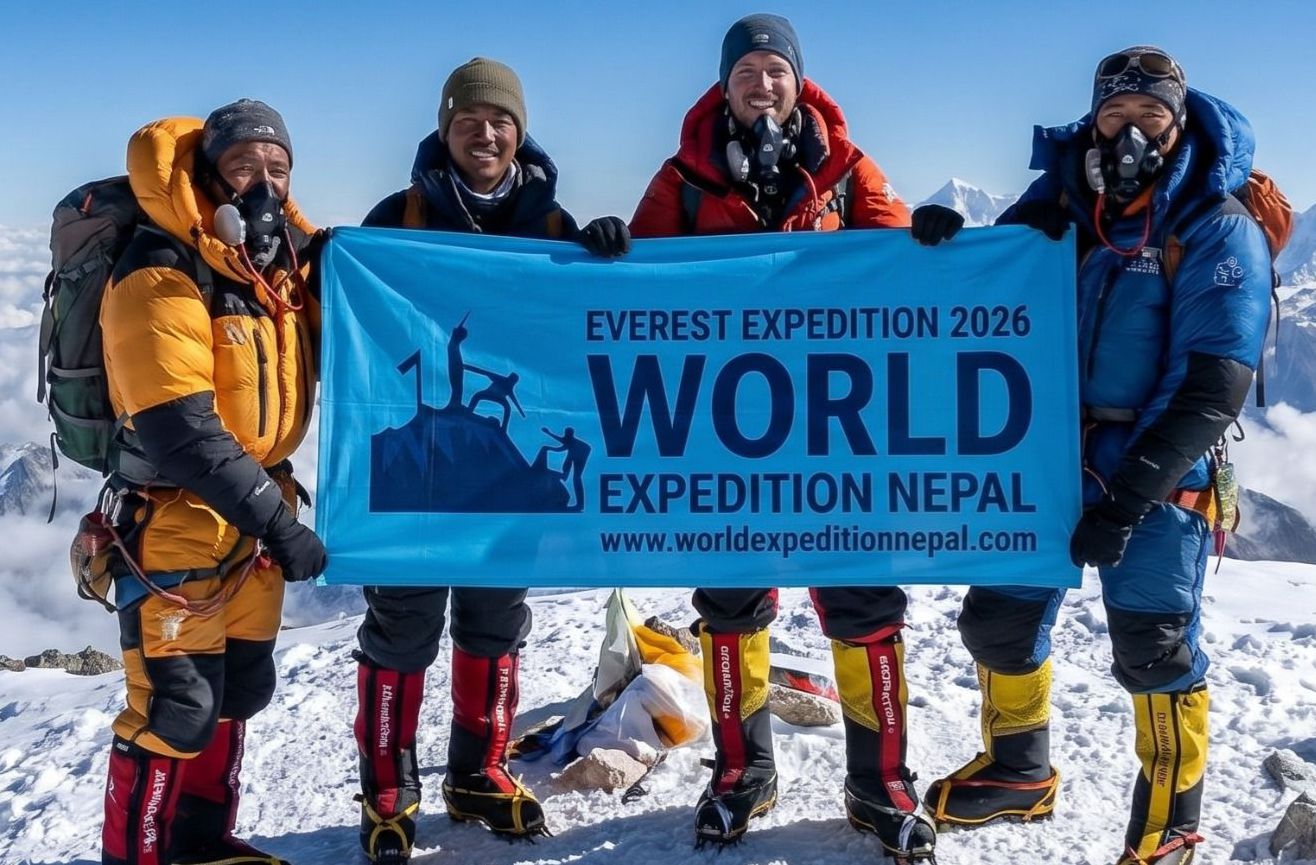
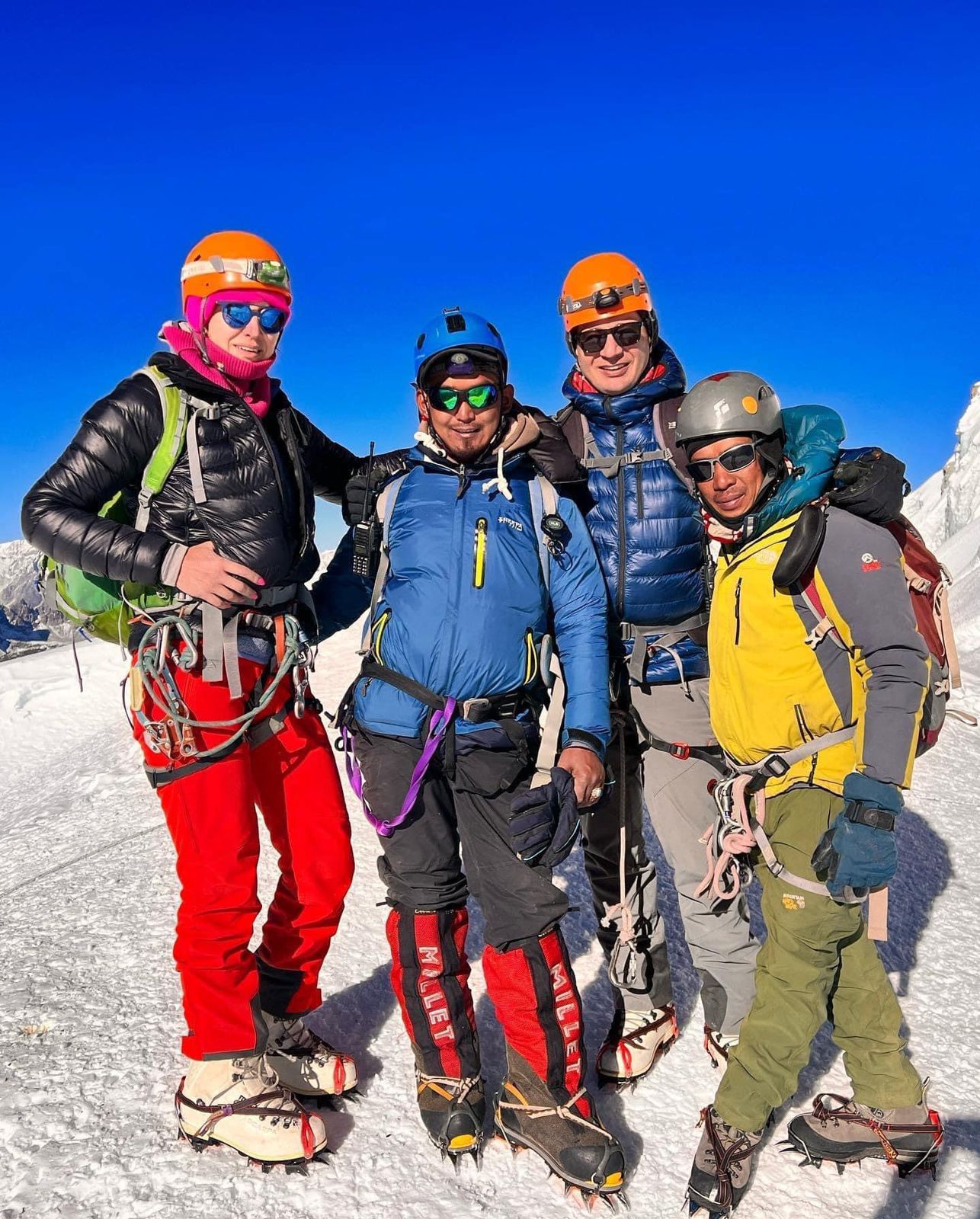
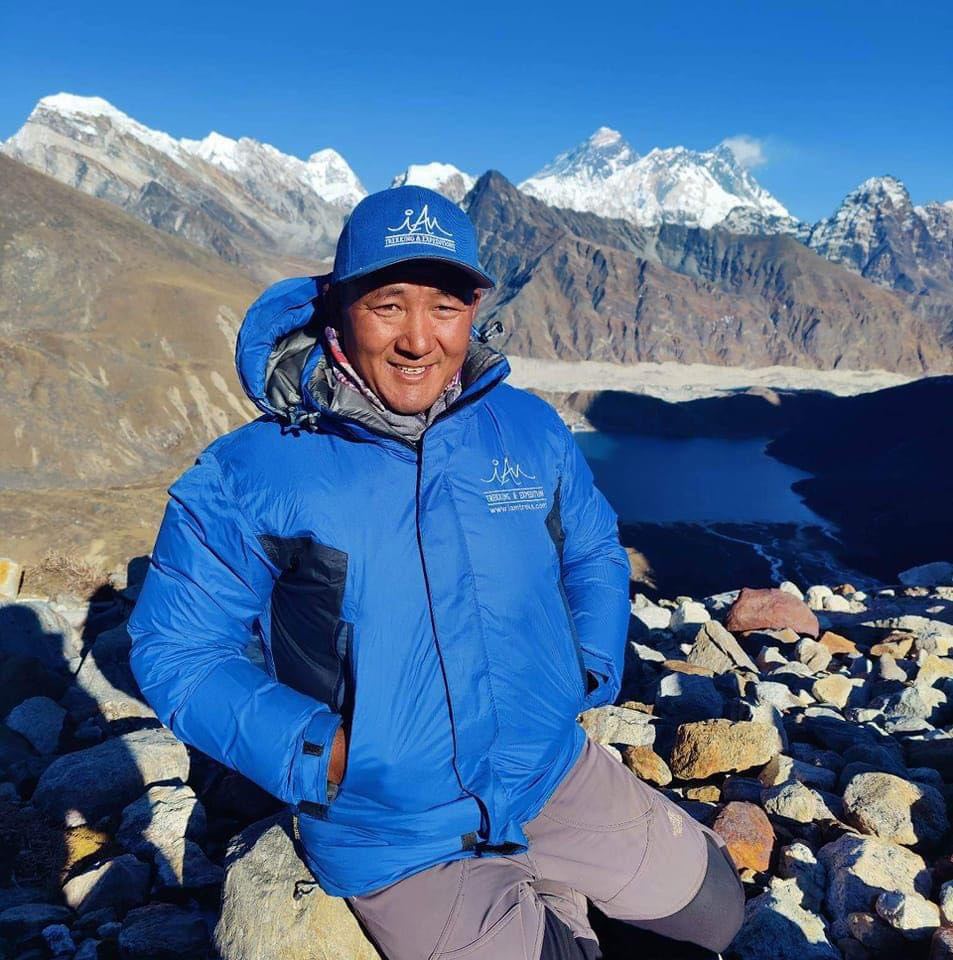
An Everest expedition is a daring and challenging endeavor that involves a team of skilled mountaineers undertaking an arduous journey to reach the summit of Mount Everest, the highest peak in the world at 8,848 meters (29,029 feet). The expedition requires meticulous planning, rigorous physical training, and acclimatization to the extreme altitude and harsh conditions of the Himalayas. Climbers face numerous dangers, including avalanches, crevasses, and unpredictable weather, making it a life-threatening pursuit that demands both mental resilience and physical endurance. The ascent typically involves multiple camps, each at higher altitudes, and climbers rely on supplemental oxygen to combat the thin air at the death zone. Despite the challenges, the allure of standing atop the world's highest point draws adventurers from all corners of the globe, seeking to conquer their fears and achieve an extraordinary sense of accomplishment and triumph.
An Everest Expedition is the ultimate mountaineering challenge, attracting adventurers and climbers from all corners of the globe. The journey to the summit of Mount Everest, the world's highest peak, demands determination, skill, and the ability to face extreme challenges. The expedition typically starts in Kathmandu, Nepal, where climbers organize logistics, obtain permits, and undergo final preparations. From there, a thrilling flight takes them to Lukla, the gateway to the Everest region. The trek to Everest Base Camp (EBC) begins, taking climbers through picturesque Sherpa villages, lush valleys, and rugged terrains, providing a taste of the Himalayan beauty and culture. At EBC, climbers set up their base, acclimatize, and make multiple rotations to higher camps, establishing crucial acclimatization and supply routes.
With the ascent date set, the climbers begin their summit push, facing challenges like the treacherous Khumbu Icefall, the Lhotse Face, and the exposed Hillary Step. The final climb to the summit is a culmination of months of preparation, grueling physical exertion, and a test of mental strength. Reaching the top of the world is an unparalleled achievement, offering breathtaking views and a sense of accomplishment like no other. However, the descent is equally demanding, requiring careful navigation through high-altitude terrain, where exhaustion and challenges persist. Successfully completing an Everest Expedition is a life-changing experience, and climbers return with memories of camaraderie, resilience, and triumph that will stay with them forever. However, it is crucial to remember that an Everest Expedition is not without risks, and climbers must respect the mountain, be prepared, and prioritize safety throughout the journey.
The history of Everest Expedition is rich and filled with fascinating stories of courage, determination, and exploration. Here are some key milestones in the climbing history of Mount Everest:
Early Attempts: The first recorded attempt to climb Everest was made in 1921 by a British reconnaissance expedition. Subsequent expeditions in 1922 and 1924 came close, but it wasn't until 1953 that Everest was finally conquered.
First Ascent: On May 29, 1953, Sir Edmund Hillary from New Zealand and Tenzing Norgay, a Sherpa of Nepal, reached the summit of Everest as part of a British expedition led by Sir John Hunt. This historic achievement marked the first successful ascent of the world's highest peak.
Other Early Ascents: After the successful 1953 expedition, more teams from various countries attempted and reached the summit of Everest. In 1960, a Chinese team made the first ascent from the northern (Tibetan) side of the mountain.
Women's Firsts: The first woman to reach the summit of Everest was Junko Tabei from Japan in 1975. In 1978, Reinhold Messner of Italy and Peter Habeler of Austria achieved the first ascent without supplemental oxygen.
The Tragic 1996 Season: In 1996, a series of events led to one of the deadliest seasons on Everest. Several expeditions faced severe weather conditions, and eight climbers died during a single day on May 10, including guides and clients from different teams. The disaster was later documented in the book "Into Thin Air" by Jon Krakauer.
21st Century Ascents: With improved equipment, better logistics, and experienced climbers, the number of successful ascents has increased in the 21st century. However, Everest continues to be a challenging and dangerous mountain, and climbers must still be cautious and prepared.
Sherpa Records: Sherpa climbers from Nepal have achieved remarkable feats on Everest, setting multiple records for the fastest ascents and most summits. These accomplished climbers have been essential guides and supporters for numerous international expeditions.
Environmental Concerns: With the popularity of Everest expeditions, there have been growing concerns about the impact of human activity on the mountain's fragile ecosystem. Efforts are being made to promote responsible climbing practices and reduce environmental impact.
Over the years, Everest has become an iconic symbol of human achievement, adventure, and the indomitable spirit of exploration.
Everest Expedition- Climbing route to summit
The climbing route to the summit of Mount Everest, also known as the South Col Route, is the most commonly used route and starts from the Nepalese side. It is the route that Sir Edmund Hillary and Tenzing Norgay took during the first successful ascent in 1953. The route involves several camps at different altitudes, and climbers make multiple rotations to acclimatize before attempting the final push to the summit. Here's an overview of the climbing route:
Kathmandu to Lukla:
The journey begins with a flight from Kathmandu to Lukla, a small town in the Everest region. Lukla Airport is known for its short and challenging runway.
Lukla to Everest Base Camp (EBC):
From Lukla, climbers trek through beautiful Sherpa villages and the stunning Khumbu Valley to reach Everest Base Camp (5,364 meters / 17,598 feet). This trek takes around 8 to 12 days and involves acclimatization stops in villages like Namche Bazaar and Dingboche.
Establishing Base Camp:
Once at Everest Base Camp, climbers set up their base and acclimatize for several weeks. They also undergo training and prepare for the challenges ahead.
Camp I (6,065 meters / 19,900 feet):
Camp I, also known as the Advanced Base Camp (ABC), is the first significant camp above Everest Base Camp. To reach Camp I, climbers must navigate the treacherous Khumbu Icefall, a section filled with crevasses, seracs, and ice towers that require careful negotiation. The icefall is constantly changing due to its dynamic nature, so experienced Sherpas fix ropes and ladders to create a safe path for climbers. Camp I is situated at the top of the Khumbu Icefall, where climbers set up their tents on the glacier. It serves as a transitional camp where climbers rest, acclimatize to higher altitudes, and start preparing for higher camps.
Return to Base Camp:
After spending some time at Camp I, climbers return to Base Camp to rest and recover.
Camp II (6,493 meters / 21,300 feet):
Camp II, also called the Advanced Base Camp II (ABC II) or the North Col, is located in the Western Cwm, a vast, flat glacial valley flanked by Everest's Southwest Face and the steep Lhotse Face. Climbers continue their ascent from Camp I to Camp II, which involves crossing the Western Cwm, a relatively flat but challenging terrain with high solar radiation. Climbers need to protect themselves from the intense sun and be cautious of crevasses in this section. Camp II is positioned near the foot of the Lhotse Face, where climbers find a more comfortable environment with larger tents and better facilities. From this camp, climbers have a clear view of the route ahead, including the steep Lhotse Face leading to Camp III.
Camp III (7,470 meters / 24,500 feet):
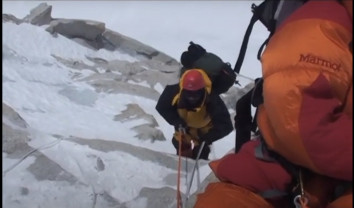
Camp III, also known as the Lhotse Camp, is a high-altitude camp located on the Lhotse Face. Climbers face a significant challenge ascending the Lhotse Face, a steep and icy slope that requires using fixed ropes and employing proper crampon and ice axe techniques. Camp III serves as a crucial acclimatization camp, allowing climbers to spend time at higher altitudes and adapt to the reduced oxygen levels. The conditions at Camp III are harsh and inhospitable, and climbers need to ensure they stay warm and well-hydrated while at this altitude. From Camp III, climbers get a stunning view of the surrounding mountains, including the Everest summit.
Camp IV (South Col) (7,906 meters / 25,938 feet):
Camp IV, also known as the South Col Camp, is the final camp before the summit push. It is located on the South Col, a relatively flat area between Everest and Lhotse. Climbers must navigate the steep and challenging terrain of the Lhotse Face and traverse the exposed Yellow Band and Geneva Spur to reach the South Col. Camp IV is the highest camp on the mountain, and climbers here face extreme cold, strong winds, and extremely low oxygen levels. This camp is typically the launching point for the summit push, where climbers rest and prepare for the grueling ascent to the summit.
Summit Push:
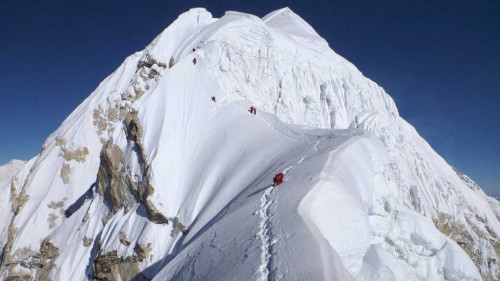
From Camp IV, climbers make their summit push, typically during the night or early morning. They navigate the rocky terrain of the South Summit and the famous Hillary Step, a challenging rock section just below the summit.
Everest Summit (8,848.86 meters / 29,031.7 feet):
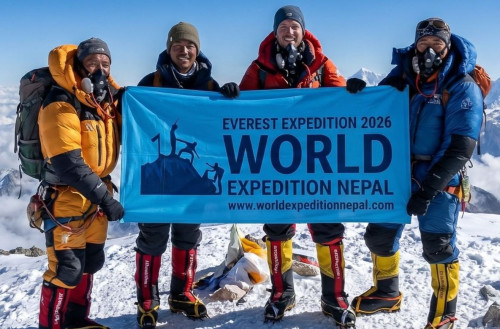
After an arduous and challenging climb, climbers reach the summit of Mount Everest, the highest point on Earth, where they can savor breathtaking views and a profound sense of achievement.
| Days | Itinerary | Altitude(in meters) | Duration(in hours) |
|---|---|---|---|
| Day 01 | Arrival In Kathmandu Airport And Transfer To Hotel | 1400 | - |
| Day 02 | Rest And Preparation Day For Assignment & Briefing | 1400 | - |
| Day 03 | Fly From Kathmandu To Lukla(2840m) and Trek To Phakding | 2610 | 4 hours |
| Day 04 | Trek From Phakding To Namche Bazaar | 3440 | 7 hours |
| Day 05 | Acclimatization day in Namche | - | - |
| Day 06 | Trek From Namche Bazaar To Tengboche | 3860 | 5 hours |
| Day 07 | Trek From Tengboche To Pheriche / Dingboche | 4410 | 5 hours |
| Day 08 | Trek From Pheriche / Dingboche To Lobuche | 4910 | 4 hours |
| Day 09 | Lobuche Rest Day For Acclimatization | - | - |
| Day 10 | Trek From Lobuche To Gorakshep | 5164 | 3 hours |
| Day 11 | Trek From Gorakshep To Everest Base Camp | 5364 | 2 hours |
| Day 12-57 | Climbing Period (Summit Period For Summit) | 8848 | |
| Day 58 | Clean Base Camp and Trek To Lobuche | 4910 | |
| Day 59 | Lobuche to Tengboche | 3860 | 7-8 hours |
| Day 60 | Tengboche to Namche Bazar | 3440 | 3-4 hours |
| Day 61 | Namche Bazar to Lukla | 2850 | 4-5 hours |
| Day 62 | Lukla to Kathmandu, Farewell dinner /group celebration | 1400 | 45 minutes flight |
| Day 63 | Rest day in Kathmandu or Departure | 1400 | - |
Welcome to Nepal. Upon arrival at Tribhuvan International Airport, the team from World Expedition Nepal will warmly receive you and transfer you to your hotel in Kathmandu.
After check-in, relax and recover from your journey or explore the vibrant streets of Thamel, Nepal’s famous tourist district. In the evening, enjoy a traditional Nepali welcome dinner with your expedition team.
Highlights
Airport pickup and hotel transfer
Meet the World Expedition Nepal team
Explore Kathmandu’s cultural atmosphere
Traditional Nepali dinner
Today is dedicated to final preparations before heading into the Himalayas. You can shop for climbing gear, exchange currency, or explore Kathmandu’s UNESCO heritage sites.
In the evening, our expedition leaders will conduct a detailed briefing about the Everest climbing route, safety protocols, acclimatization schedule, and expedition logistics.
Highlights
Everest expedition briefing
Gear inspection and final preparation
Meet your climbing guides and Sherpa team
Explore Kathmandu markets
Begin your Everest journey with a scenic flight from Kathmandu to Lukla, known as one of the most exciting mountain airports in the world
After landing, start trekking through beautiful Sherpa villages, pine forests, and suspension bridges toward Phakding.
Trek Details
Flight Duration: 45 minutes
Trek Duration: 4 hours
Highlights
Scenic Himalayan flight
First trek in the Everest region
Walk through traditional Sherpa villages
Beautiful forest and river trails
Accommodation: Teahouse
Today’s trek follows the Dudh Koshi River and crosses several suspension bridges before entering Sagarmatha National Park.
After a challenging uphill climb, arrive at Namche Bazaar, the bustling Sherpa town and gateway to Everest.
Trek Details
Duration: 6–7 hours
Highlights
Sagarmatha National Park
Stunning Himalayan landscapes
First views of Mount Everest
Explore Namche Bazaar
Accommodation: Teahouse
Meals: Breakfast, Lunch, Dinner
Acclimatization and rest days are vital components of any high-altitude trek, including the Everest expedition. Spending an extra day in Namche Bazaar allows climbers to adapt their bodies to the increasing altitude, reducing the risk of altitude-related illnesses and ensuring a safer ascent.
Here's what a typical acclimatization and rest day in Namche Bazaar might entail:
Acclimatization and Rest Day in Namche Bazaar
Sleep-in and Relax:
On this day, trekkers can enjoy a more leisurely morning without the need to start the day's trek. We can sleep in, relax, and take advantage of the comfortable facilities provided by our accommodation.
Breakfast and Hydration:
A hearty breakfast is essential to fuel our body for the acclimatization activities ahead. It's crucial to stay well-hydrated throughout the day by drinking plenty of water, as proper hydration aids in acclimatization.
Hike to Everest View Hotel:
One of the popular activities during the acclimatization day in Namche Bazaar is a hike to the Everest View Hotel. The hotel is located at a higher elevation above Namche and offers breathtaking panoramic views of Mount Everest, Lhotse, Ama Dablam, and other surrounding peaks.
Visit Sagarmatha National Park Visitor Center:
The Sagarmatha National Park Visitor Center in Namche Bazaar provides valuable information about the local flora, fauna, geology, and Sherpa culture. We can spend some time exploring the exhibits and learning more about the Everest region.
Rest and Relaxation:
Use the day to rest and relax. We can read a book, journal our experiences, interact with fellow climbers, or simply enjoy the serene ambiance of Namche Bazaar.
Acclimatization Walks:
Climbers can also take shorter walks around Namche Bazaar to further aid acclimatization. These walks help your body get accustomed to the higher elevation without exerting too much energy.
Hygiene and Health:
Take care of personal hygiene and health. Proper hygiene and sanitation practices are essential to prevent any illnesses that could jeopardize the expedition.
Altitude Awareness:
Throughout the acclimatization day, be conscious of our body and any signs of altitude sickness. Report any symptoms such as headaches, dizziness, or difficulty breathing to the expedition leader or medical personnel.
Overnight stay in Namche Bazaar.
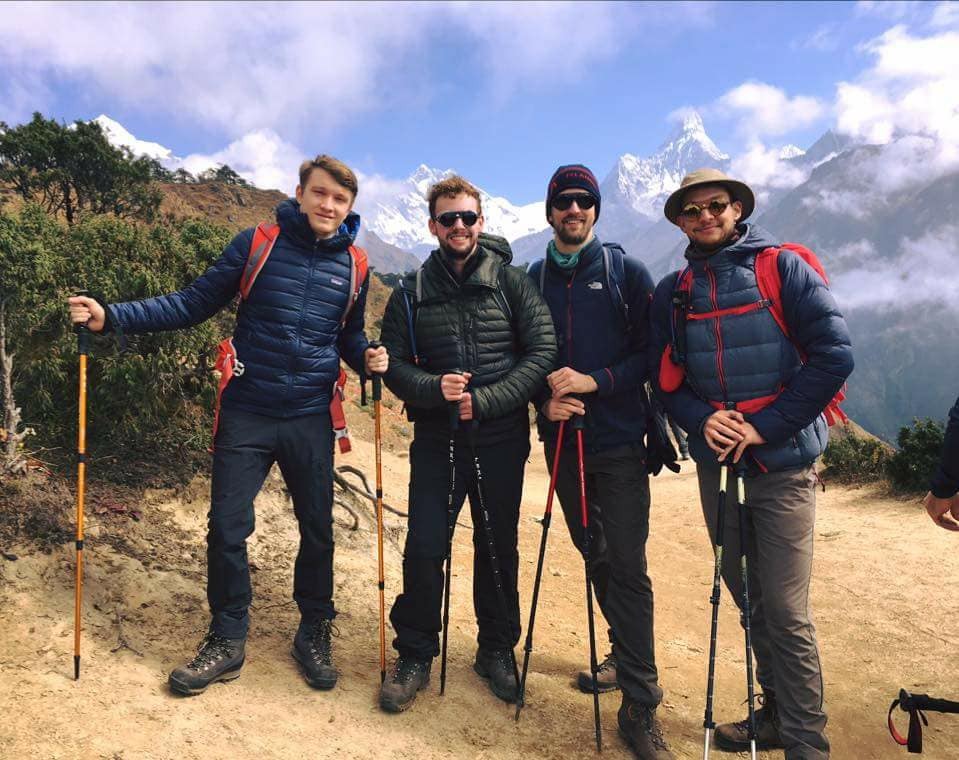
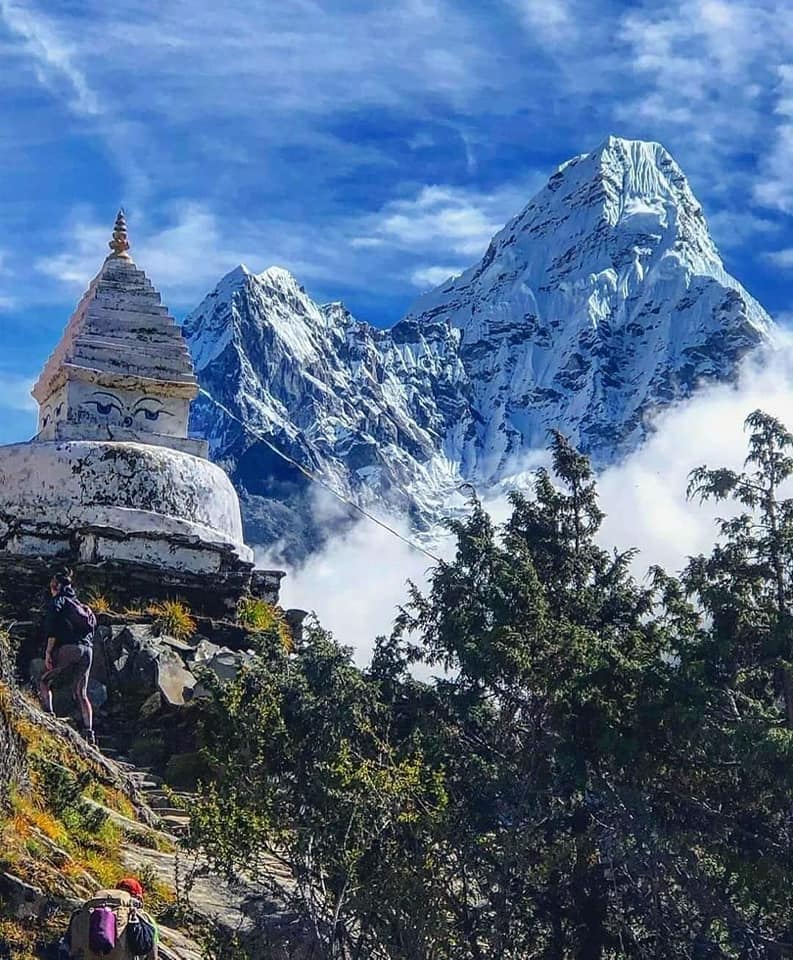
Trek along scenic mountain trails with breathtaking views of Everest, Ama Dablam, and Thamserku before reaching Tengboche.
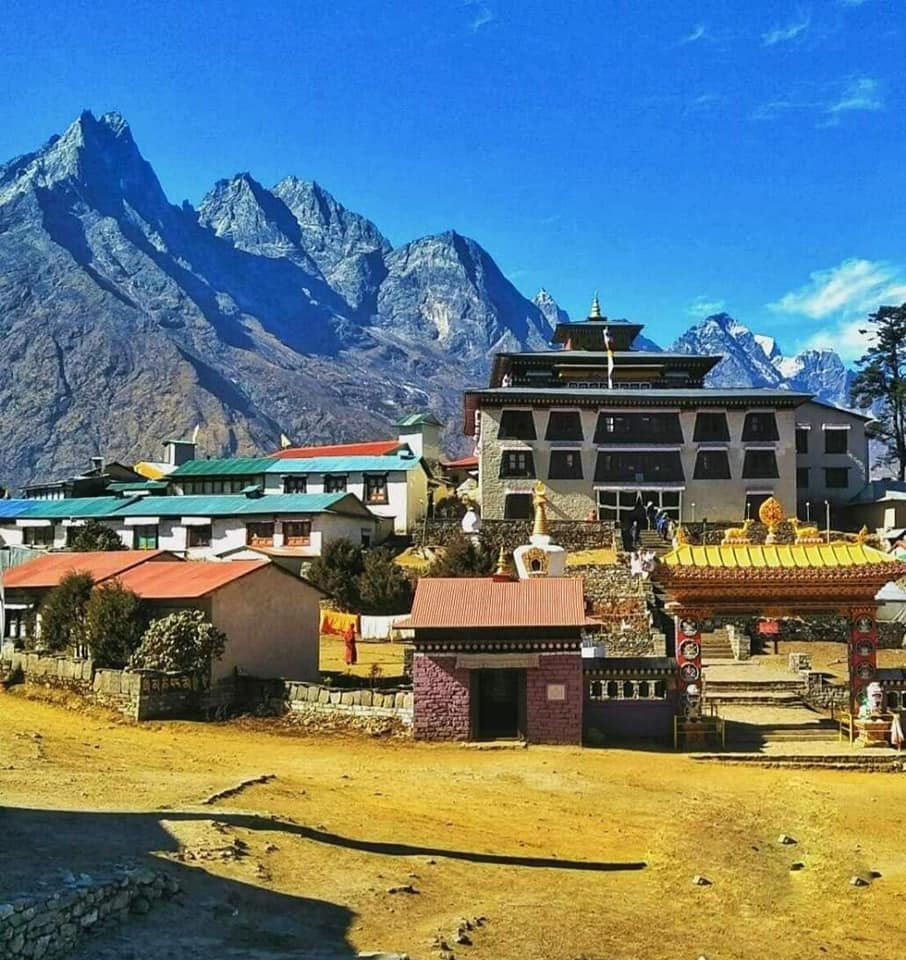
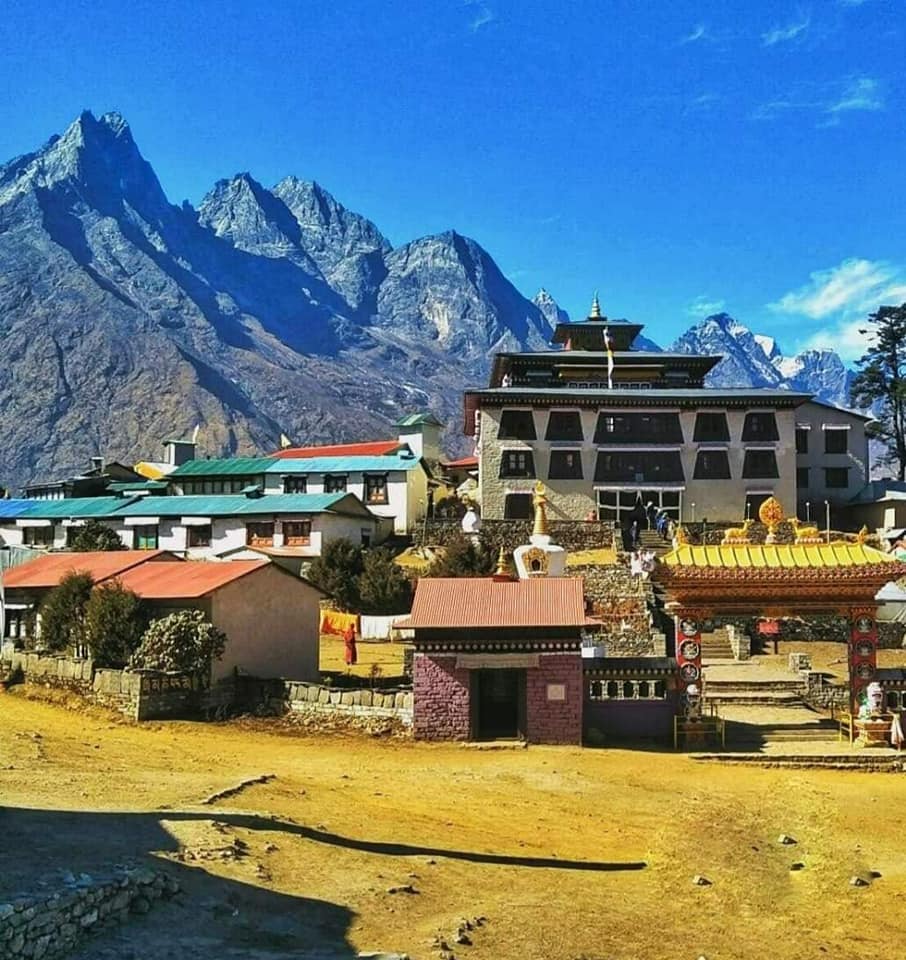
Visit the famous Tengboche Monastery, the spiritual center of the Khumbu region.
Trek Details
Duration: 5 hours
Highlights
Incredible Himalayan panoramas
Visit Tengboche Monastery
Peaceful forest trails
Traditional mountain culture
Accommodation: Teahouse
Meals: Breakfast, Lunch, Dinner
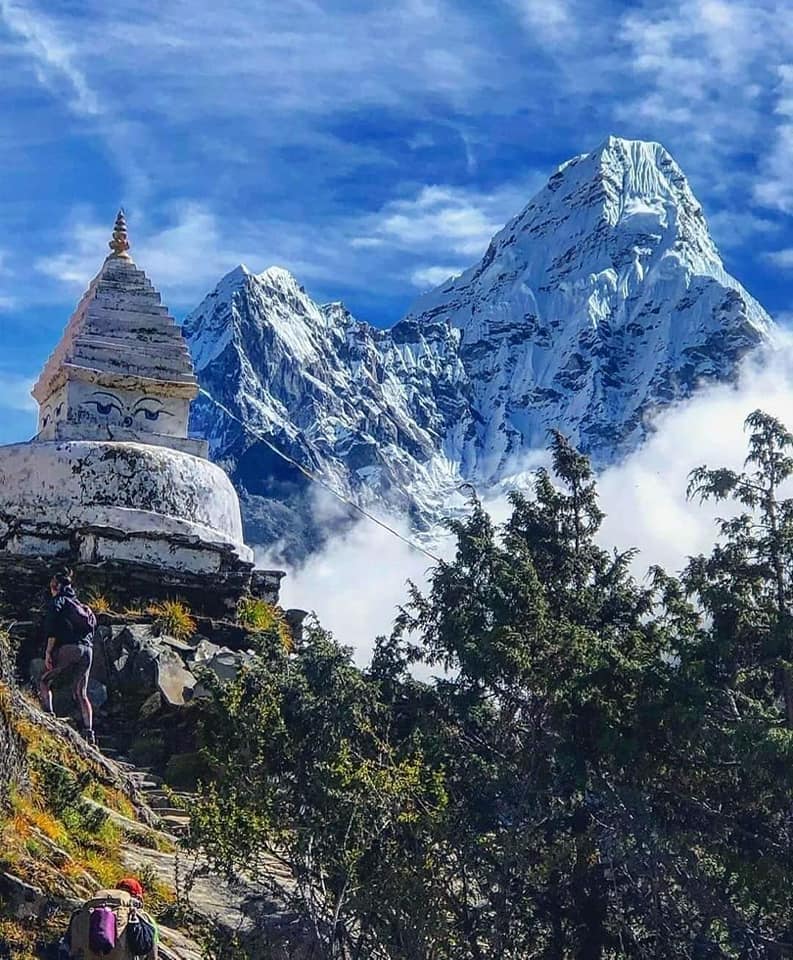
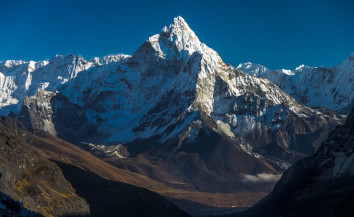
Continue trekking through alpine forests and Sherpa villages while enjoying close-up views of Ama Dablam.
Reach Dingboche, a beautiful high-altitude settlement surrounded by towering peaks.
Trek Details
Duration: 5 hours
Highlights
Scenic suspension bridges
High-altitude Himalayan landscapes
Spectacular mountain photography opportunities
Accommodation: Teahouse
Meals: Breakfast, Lunch, Dinner
Today’s trail leads through rugged alpine terrain and glacial valleys toward Lobuche.
Pass memorials dedicated to climbers who lost their lives on Everest.
Trek Details
Duration: 4–5 hours
Highlights
Stunning glacier scenery
Everest memorial site
Views of Lhotse and Nuptse
Accommodation: Teahouse
Meals: Breakfast, Lunch, Dinner
Spend the day acclimatizing and preparing for the final approach to Everest Base Camp.
Highlights
Essential altitude acclimatization
Rest and recovery
Panoramic mountain views
Accommodation: Teahouse
Meals: Breakfast, Lunch, Dinner
Trek through rocky glacial terrain to Gorakshep, the final stop before Everest Base Camp.
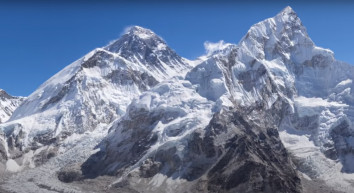
Optional hike to Kala Patthar for the best close-up views of Mount Everest.
Trek Details
Duration: 3 hours
Highlights
Trek above 5,000m
Kala Patthar viewpoint
Spectacular Everest scenery
Accommodation: Teahouse
Meals: Breakfast, Lunch, Dinner
Reach the legendary Everest Base Camp, home to climbers from around the world preparing for the summit push.
Trek Details
Duration: 2–3 hours
Highlights
Arrive at Everest Base Camp
Views of Khumbu Glacier
Begin final expedition preparation
Accommodation: Expedition Camp
Meals: Breakfast, Lunch, Dinner
After the expedition, the team will clean the base camp area to support responsible and sustainable mountaineering.
Then descend toward Lobuche.
Trek Details
Duration: 5 hours
Highlights
Eco-friendly expedition practices
Scenic return trek
Celebrate your Everest success
Accommodation: Teahouse
Meals: Breakfast, Lunch, Dinner
Clean up and preparation for the return journey after the Everest expedition are essential steps to ensure a responsible and safe departure from the mountain region.
Here's a guide on clean-up and return preparation:
Base Camp Clean-up:
Before leaving Everest Base Camp, expedition teams participate in clean-up efforts to ensure the area is left pristine. All trash, waste, and non-biodegradable materials are collected and properly disposed of or carried back to lower elevations for proper disposal.
Leave No Trace:
Expedition members are committed to the principles of "Leave No Trace," which means leaving the natural environment as they found it. This includes not leaving any trash or personal items behind and minimizing the impact on the environment during the entire expedition.
Return of Personal Gear:
We gather all their personal gear, including any rented equipment, to return it to the expedition company or the appropriate rental agency. This includes climbing gear, clothing, and any other items used during the expedition.
Packing and Organizing:
Before starting the trek back to Lukla, we organize their gear and belongings, ensuring everything is properly packed and secured. Packing efficiently is crucial for the return journey, as trekkers need to carry their gear on their way back.
Overnight stay in Base Camp.
Descend through scenic valleys, villages, and forests toward Tengboche.
Trek Details
Duration: 8 hours
Highlights
Amazing mountain scenery
Traditional Sherpa hospitality
Beautiful downhill trekking
Accommodation: Teahouse
Meals: Breakfast, Lunch, Dinner
Continue descending toward Namche Bazaar through pine forests and mountain trails.
Trek Details
Duration: 4 hours
Highlights
Comfortable trekking trails
Return to Namche Bazaar
Relax and celebrate
Accommodation: Teahouse
Meals: Breakfast, Lunch, Dinner
Complete your final trekking day in the Everest region and return to Lukla.
Trek Details
Duration: 5 hours
Highlights
Final mountain trekking experience
Farewell to the Himalayas
Celebration with trekking staff
Accommodation: Teahouse
Meals: Breakfast, Lunch, Dinner
Flying back from Lukla to Kathmandu is a common way for trekkers and climbers to return to the capital city after completing their Everest region trek or expedition. Lukla Airport (Tenzing-Hillary Airport) is a small airport in the Everest region, and flights are subject to weather conditions. Keep in mind that flight schedules can be unpredictable, and delays or cancellations may occur due to adverse weather conditions in the mountains.
Lukla to Kathmandu Flight
Early Morning:
After completing our trek or expedition, we will arrive at Lukla. It's advisable to book a morning flight back to Kathmandu as weather conditions are usually more favorable during this time.
Check-in:
Head to the Lukla Airport's terminal building and check in for our flight. It's essential to arrive at the airport well in advance as flight timings may change, and there might be a queue for check-in.
Boarding:
Once the flight is ready, board the small aircraft for the approximately 30 to 40-minute flight to Kathmandu. The flight itself is a memorable experience as we get to witness stunning views of the Himalayan mountains.
Arriving in Kathmandu:
Upon reaching Kathmandu's Tribhuvan International Airport, collect our luggage and clear the immigration and customs formalities.
Transfer to hotel :
We will be transfer to the Hotel where you can rest your body after a long period of expedition.
Overnight stay in Kathmandu.
Your departure from Kathmandu marks the end of your incredible Everest expedition and your time in Nepal. Here's what you can expect on your departure day:
Check-out from Accommodation:
Check out from your accommodation in Kathmandu and settle any outstanding bills.
Final Packing:
Double-check your belongings and ensure everything is properly packed for your journey back home.
Airport Transfer:
For airport transfer, The World Expedition Nepal will Arrange transportation to Tribhuvan International Airport (TIA) in Kathmandu.
Flight Check-in:
Upon arrival at the airport, proceed to the airline's check-in counter to obtain your boarding pass for your international flight.
Security and Immigration:
Go through security checks and immigration procedures before proceeding to the departure gate.
Farewell to Nepal:
As you wait for your flight, take some time to reflect on your incredible journey in Nepal. Cherish the memories of the majestic Himalayas, the warm hospitality of the Nepali people, and the sense of accomplishment from reaching Everest Base Camp.
Departure Flight:
Board your international flight from Kathmandu's Tribhuvan International Airport, taking with you unforgettable experiences and a deep appreciation for the wonders of the Everest region and Nepal.
Return Home:
Your flight will take you back to your home country, where you'll reunite with loved ones and share your incredible Everest expedition stories.
Post-Expedition Reflection:
Take some time to reflect on your Everest expedition and the personal growth, resilience, and achievements you've gained from this extraordinary journey.
Stay Connected:
Keep in touch with your fellow trekkers and the trekking agency you traveled with. Share photos and memories and maintain the connections you made during your Everest expedition.
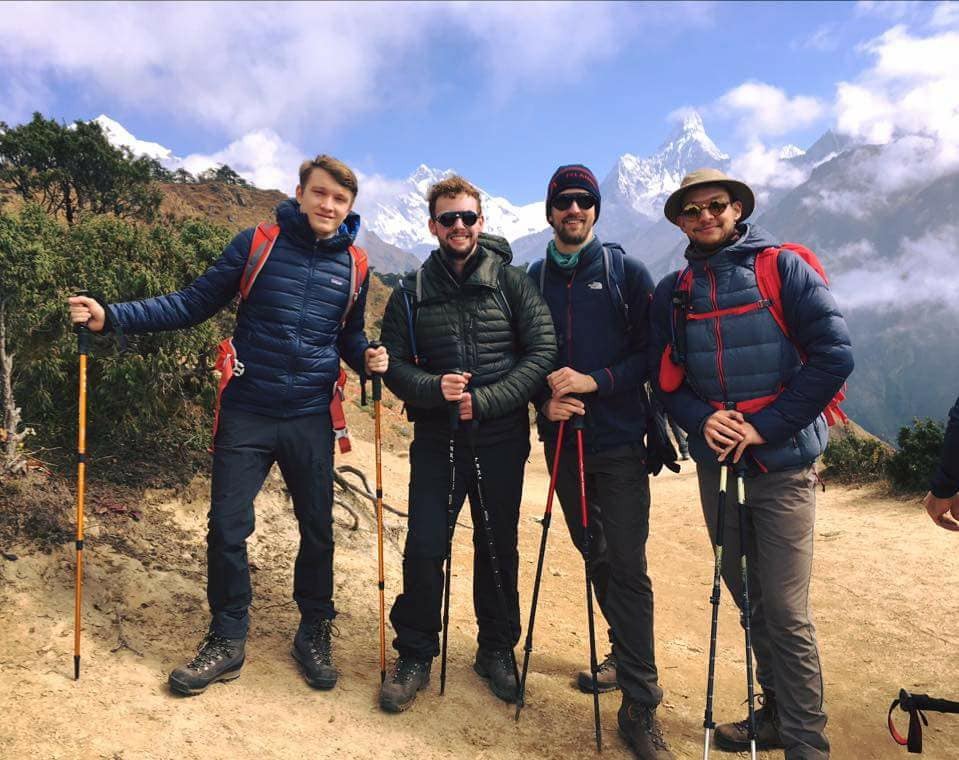

The Everest Expedition is one of the most challenging and hazardous endeavors in mountaineering, demanding physical endurance, mental resilience, and careful planning. The difficulties faced during this ambitious journey are numerous and can be life-threatening. Let's explore these challenges in detail:
Extreme Altitude:
Harsh Weather Conditions:
Physical Demands:
Technical Climbing Challenges:
Oxygen Deprivation:
High Altitude Crevasses:
Avalanches:
Physical and Mental Fatigue:
Emergency Evacuation and Limited Medical Facilities:
Crowds and Logistics:
Psychological Stress:
The best months for an Everest Expedition are generally during the pre-monsoon and post-monsoon seasons, which provide more stable weather conditions and safer climbing conditions. The two main climbing seasons for Mount Everest are:
Spring Season (Pre-Monsoon):
Autumn Season (Post-Monsoon):
Both seasons have their advantages and challenges, and the choice between them depends on individual preferences, availability, and risk tolerance.
The cost of an Everest Expedition can vary significantly depending on several factors, including the expedition type (guided commercial vs. independent), the level of support and services provided, the duration of the expedition, the size of the climbing team, and the experience of the climbers.
For Everest Expedition, The cost is 31400 USD for full expedition service and 19300 USD for Base Camp Service.
An Everest expedition refers to the challenging and adventurous journey undertaken by mountaineers and climbers to reach the summit of Mount Everest, the highest peak in the world at 8,848.86 meters (29,031.7 feet) above sea level. The expedition typically starts with a trek through the stunning landscapes of the Everest region in Nepal, passing through Sherpa villages and high-altitude terrain. Climbers acclimatize to the increasing altitude by establishing camps at various elevations before attempting the final summit push. The climb involves overcoming extreme weather conditions, technical challenges, and high-altitude risks. Everest expeditions require meticulous planning, physical fitness, and mental resilience, making it one of the most sought-after and demanding mountaineering experiences on the planet.
Climbing Mount Everest is an extremely challenging and dangerous endeavor, and it is generally not recommended for beginners. The ascent to the summit of Everest requires significant mountaineering experience, technical skills, physical fitness, and mental preparation. Climbers must have previous high-altitude climbing experience, preferably having summited other peaks above 6,000 meters (19,685 feet) and 7,000 meters (22,965 feet).
Before attempting Everest, climbers should have experience in ice and rock climbing, crevasse rescue techniques, and be proficient in using mountaineering equipment. They should also have undergone proper training in high-altitude climbing and have experience with extended stays at high elevations to acclimatize to low oxygen levels.
Besides technical skills, climbers must be mentally prepared to face the harsh conditions, extreme cold, high winds, and the risks associated with climbing at such high altitudes, including altitude sickness, avalanches, and unpredictable weather.
Many climbers spend years building up their mountaineering resume and skills before attempting Everest. Climbing Mount Everest is a serious undertaking and should not be taken lightly. It is essential to go on guided expeditions led by experienced and qualified guides who can provide the necessary support, guidance, and safety measures.
The first man to reach the summit of Mount Everest was Sir Edmund Hillary of New Zealand and Tenzing Norgay, a Sherpa of Nepal. They accomplished this historic feat on May 29, 1953, as part of the British expedition led by Colonel John Hunt. At 11:30 a.m. local time, Hillary and Tenzing stood atop the world's highest peak, marking a momentous achievement in mountaineering history. Their successful ascent of Everest remains one of the most significant milestones in human exploration, bravery, and determination, and it has inspired countless climbers to attempt the same formidable challenge in the decades that followed.
One of the most famous and tragic deaths on Mount Everest was the 1996 Mount Everest disaster. On May 10-11, 1996, several expeditions attempted to summit Mount Everest, but a combination of severe weather conditions and a series of unfortunate events led to multiple fatalities.
Among the fatalities were eight climbers from two commercial expeditions: Adventure Consultants, led by Rob Hall, and Mountain Madness, led by Scott Fischer. The climbers encountered a fierce storm near the summit, which trapped them in the "Death Zone" (above 8,000 meters or 26,247 feet) for an extended period, causing exhaustion, frostbite, and dehydration.
The disaster was later chronicled in Jon Krakauer's bestselling book "Into Thin Air," which provided a gripping firsthand account of the events that unfolded on Everest during that ill-fated climbing season.
Mount Everest was named after Sir George Everest, a British surveyor general of India from 1830 to 1843. In 1852, British surveyor Andrew Waugh led an expedition to measure the height of the mountain, which was locally known as "Chomolungma" in Tibet and "Sagarmatha" in Nepal. Waugh decided to name the peak after Sir George Everest as a tribute to his predecessor and in recognition of his significant contributions to surveying in India. The name "Mount Everest" was officially adopted and has since become the universally recognized name for the highest peak on Earth. However, the local names, Chomolungma and Sagarmatha, are still widely used and hold deep cultural and spiritual significance in the region.
The first person to reach the summit of Mount Everest without supplemental oxygen was Reinhold Messner, an accomplished Italian mountaineer. He achieved this feat on August 20, 1978, during a solo ascent of the mountain. Messner's accomplishment was a significant milestone in mountaineering history, as climbing Everest without supplemental oxygen is an exceptionally challenging and demanding endeavor due to the extreme altitude and low levels of oxygen in the "Death Zone" above 8,000 meters (26,247 feet). Messner's remarkable achievement demonstrated exceptional physical and mental endurance, and it set a new standard for high-altitude climbing without artificial aid.
The youngest person to reach the summit of Mount Everest is Jordan Romero, an American mountaineer. Jordan accomplished this remarkable feat on May 22, 2010, at the age of 13 years and 10 months. His successful ascent of Everest made him the youngest boy to reach the summit of the world's highest peak. Jordan's achievement garnered significant media attention and inspired many young adventurers to pursue their dreams in mountaineering and outdoor exploration.
Yes, Mount Everest can be seen from space under specific conditions. The International Space Station (ISS) orbits the Earth at an average altitude of approximately 400 kilometers (about 250 miles), which is much closer to the planet's surface compared to the distance of Mount Everest from the ground.
From the ISS, astronauts have a unique vantage point to view Earth's surface, including prominent geographical features like Mount Everest. However, seeing Everest from space is still not as straightforward as looking out of a window. Astronauts must be flying over the region when the weather is clear, and the skies are not obscured by clouds.
Mount Everest is famous for several reasons:
Highest Peak in the World:
Mount Everest is the tallest mountain on Earth, standing at 8,848.86 meters (29,031.7 feet) above sea level. Its towering height makes it a symbol of human endeavor and exploration.
Challenging Ascent:
Climbing Everest is one of the most difficult and dangerous mountaineering feats. Its extreme altitude, harsh weather conditions, and technical challenges make it a sought-after achievement for experienced climbers.
First Ascent:
The successful summit of Mount Everest by Sir Edmund Hillary and Tenzing Norgay on May 29, 1953, was a historic moment in mountaineering history and garnered widespread international attention.
Cultural and Spiritual Significance:
Mount Everest holds deep cultural and spiritual significance for the Sherpa people and other indigenous communities in the region. It is known as "Chomolungma" in Tibetan and "Sagarmatha" in Nepali, reflecting its sacred status.
Tourist Attraction:
The Everest region in Nepal attracts thousands of trekkers and adventure enthusiasts every year. The trek to Everest Base Camp is a popular route, offering stunning landscapes and a chance to experience the Himalayan culture.
Scientific Interest:
Mount Everest is of significant interest to researchers and scientists studying high-altitude physiology, geology, glaciology, and climate change. Its glaciers and ice provide valuable insights into the Earth's changing environment.
Iconic Landmark:
Mount Everest has become an iconic landmark, representing the pinnacle of human achievement and resilience. It has inspired countless individuals to push their limits and pursue their dreams.
The success rate of Everest expeditions can vary from year to year and depends on several factors, including weather conditions, the experience of climbers, the quality of support and logistics provided by the expedition teams, and the climbers' physical and mental preparation. On average, the success rate for climbers attempting to reach the summit of Mount Everest is estimated to be around 50% to 60%.
Several factors contribute to the challenging nature of Everest expeditions, including extreme altitude, severe weather conditions, technical difficulties, and the risk of altitude-related illnesses. Climbers must undergo extensive acclimatization and preparation to increase their chances of success.
Commercial guided expeditions often have higher success rates compared to independent climbers. These guided expeditions provide better support, experienced guides, and established logistics to help climbers reach the summit safely.
An Everest expedition requires a comprehensive list of specialized clothing, gear, and climbing equipment to ensure safety, comfort, and success in the challenging and extreme conditions of high-altitude mountaineering.
Here's a detailed overview of the essential items:
Clothing:
Base Layers: Moisture-wicking and quick-drying base layers made of synthetic or merino wool to keep the body dry and warm.
Insulation Layers: Down or synthetic insulated jackets and pants to provide warmth in extreme cold conditions.
Hard Shell Jacket and Pants: Waterproof and breathable outer layers to protect against wind, snow, and rain.
Mid-Layers: Fleece or softshell jackets and pants for added insulation and versatility.
Gloves: Multiple pairs of gloves, including liner gloves, insulated gloves, and waterproof gloves, to protect hands from frostbite.
Headwear: Warm beanie, balaclava, and a neck gaiter to protect the head and face from cold and wind.
Goggles and Sunglasses: High-quality, UV-protective goggles and sunglasses with side shields to shield eyes from snow glare and UV rays.
High-Altitude Boots: Sturdy, insulated mountaineering boots designed for high-altitude climbing.
Crampons: Rigid crampons that fit the mountaineering boots for traction on ice and snow.
Gaiters: Waterproof gaiters to keep snow out of boots.
Climbing Gear and Equipment:
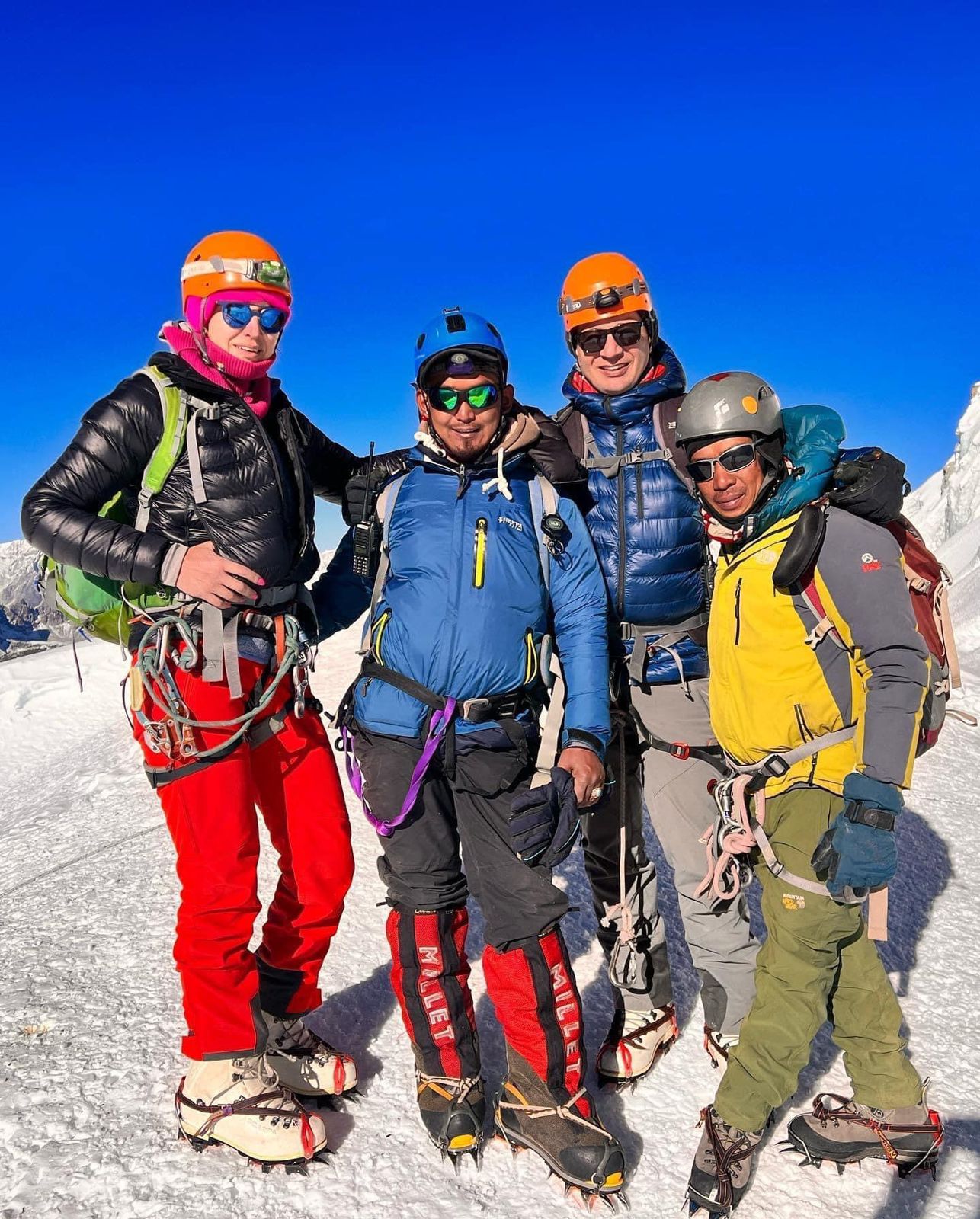
Climbing Harness: A comfortable and adjustable harness for safety during rope travel and for rappelling.
Carabiners and Locking Devices: Multiple carabiners for attaching to ropes and other gear, including locking carabiners for added safety.
Climbing Helmet: A durable helmet to protect the head from falling debris and impacts.
Ice Axe: A mountaineering ice axe for self-arrest and secure climbing on ice and snow.
Climbing Rope: Dynamic ropes for glacier travel and fixed line ascents.
Ascenders and Descenders: Ascenders for ascending ropes and descenders for controlled rappelling.
Snow Pickets and Ice Screws: Anchoring devices for creating secure belay and rappel points.
Oxygen Equipment (for some expeditions): For climbing at extreme altitudes, supplemental oxygen systems, cylinders, and masks may be necessary.
Backpack: A large, sturdy backpack to carry climbing equipment and personal gear.
Sleeping Bag: A high-quality, cold-rated sleeping bag suitable for high-altitude camping.
Camping Gear: Lightweight and compact camping equipment, including a tent, stove, cooking utensils, and a sleeping pad.
Additional Items:
Trekking Gear: Comfortable trekking clothing, trekking poles, and a good-quality backpack for the trek to and from Everest Base Camp.
Personal Items: Toiletries, medications, and personal first aid kit.
An Everest Expedition requires several permit documents to ensure compliance with regulations, conservation efforts, and safety measures. Here's a detailed overview of the essential permit documents required:
Climbing Permit:
The climbing permit is the primary permit required for an Everest Expedition. It is issued by the Nepal Ministry of Tourism, Culture, and Civil Aviation (MoTCCA). The permit allows climbers to attempt the ascent of Mount Everest and is valid for a specific climbing season. The climbing permit fee is set by the government and varies based on the number of climbers in the team and the season.
Sagarmatha National Park Permit:
Mount Everest is located within Sagarmatha National Park, a protected area in Nepal. To enter the national park, climbers and trekkers must obtain the Sagarmatha National Park Permit, issued by the Department of National Parks and Wildlife Conservation. This permit fee contributes to the conservation and maintenance of the national park.
TIMS Card (Trekkers' Information Management System):
The TIMS card is required for trekking in Nepal, including the trek to Everest Base Camp. It is issued by the Nepal Tourism Board and helps in providing important information and ensuring the safety of trekkers and climbers in the region.
Liaison Officer Permit:
For all mountaineering expeditions in Nepal, including Everest, a government-appointed Liaison Officer (LO) is required to accompany the team. The LO facilitates communication with local authorities, ensures compliance with regulations, and assists with logistics.
Icefall Route Fee:
Climbers must pay a fee for using the Khumbu Icefall route, which is one of the most dangerous sections of the climb. This fee is used for fixing ropes and maintaining the route through the icefall.
Garbage Deposit:
To promote responsible mountaineering and environmental conservation, climbers are required to submit a refundable garbage deposit. The deposit is returned to the climbers upon successfully bringing down a certain amount of garbage from the mountain.
Additional Permits:
Depending on the approach and route chosen for the expedition, climbers may need additional permits, such as permits for restricted areas or special zones.
During an Everest Expedition, food and accommodation arrangements are critical aspects that need to be carefully planned to ensure the well-being and success of the climbers. Here's how food and accommodation are typically managed during an Everest Expedition:
Base Camp Accommodation: At Everest Base Camp (EBC), climbers and their support teams set up a temporary camp for the duration of the expedition. Base Camp provides a more comfortable and stable environment for rest and recovery between acclimatization rotations and summit attempts. Accommodations at Base Camp include large tents with sleeping facilities, dining tents, and common areas.
High Camps Accommodation: As climbers move higher up the mountain during acclimatization and summit attempts, they establish a series of high camps. High camps are strategically located at different altitudes, allowing climbers to acclimatize gradually. Accommodations at high camps are more basic and involve smaller tents shared by climbers during their ascent.
Food at Base Camp: Base Camp typically has a well-equipped kitchen and a team of cooks to prepare meals for the climbers and support staff. The food is carefully planned to provide the necessary nutrition and energy for the challenging expedition. The menu includes a mix of local and international dishes, with an emphasis on high-calorie and easily digestible foods.
Food at High Camps: At high camps, food options become more limited due to logistical challenges. Climbers usually rely on freeze-dried or dehydrated meals, energy bars, and snacks that can be easily carried and prepared at high altitudes.
Sherpa Support: Sherpas play a crucial role in Everest Expeditions, acting as guides, porters, and support staff. They are responsible for setting up camps, fixing ropes, and carrying essential supplies, including food and cooking equipment.
Acclimatization Rotations: Before attempting the summit, climbers go through acclimatization rotations, during which they climb up to higher camps and then return to Base Camp for rest. These rotations allow climbers' bodies to adapt to the reduced oxygen levels at high altitudes.
Hydration and Nutrition: Proper hydration and nutrition are vital during the expedition to maintain energy levels and reduce the risk of altitude-related illnesses. Climbers must drink plenty of fluids and consume a balanced diet, even though appetite may be reduced at high altitudes.
Environmental Responsibility: To minimize environmental impact, climbers are encouraged to adhere to a "leave no trace" policy, carrying out all waste and garbage from the mountain, including used oxygen cylinders and food wrappers.
Yes, having insurance is a critical requirement for an Everest Expedition, and it is highly recommended for any high-altitude mountaineering adventure. Mountaineering is an inherently risky and challenging activity, and climbing Everest poses significant dangers, including altitude-related illnesses, injuries, and unforeseen emergencies.
Here are the key reasons why insurance is essential for an Everest Expedition:
Medical Coverage: High-altitude climbing carries a higher risk of altitude sickness, frostbite, and other medical emergencies. Having insurance that covers medical evacuation and treatment expenses is crucial in case of any medical issues during the expedition.
Emergency Evacuation: In the event of a serious injury or medical emergency, helicopter evacuation may be necessary. The cost of such evacuations can be exorbitant, and insurance can cover these expenses, ensuring that you receive prompt and appropriate medical care.
Trip Cancellation/Interruption: An Everest Expedition involves significant financial investment and extensive planning. Insurance can protect you financially in case your trip needs to be canceled or interrupted due to unexpected events like illness, injury, or natural disasters.
Gear and Equipment Coverage: Climbing gear and equipment required for Everest Expeditions can be expensive. Insurance can help cover the cost of lost, stolen, or damaged equipment during the climb.
Personal Liability: Insurance can offer liability coverage in case of accidental damage to property or injury to others during the expedition.
When obtaining insurance for an Everest Expedition, ensure that it is specifically designed for high-altitude mountaineering and includes coverage for climbing above 6,000 meters (19,685 feet) or higher.
Yes, for most climbers, having a guide and porter is highly recommended and often required during an Everest Expedition.
Here's why:
Experience and Expertise:
Climbing Mount Everest is an incredibly challenging and technical endeavor. Experienced guides have extensive knowledge of the mountain, weather patterns, route conditions, and the best strategies for a successful summit attempt. They can navigate the complexities of high-altitude climbing and help make crucial decisions regarding safety and acclimatization.
Safety and Support:
Guides are trained in high-altitude rescue and first aid techniques. They can recognize the signs of altitude sickness and other health issues, ensuring climbers receive timely medical attention. Having a guide greatly enhances safety during the expedition.
Logistics and Planning:
An Everest Expedition involves complex logistics, such as obtaining permits, organizing transportation, setting up camps, and managing supplies. Guides handle these logistical aspects, allowing climbers to focus on their physical and mental preparation for the climb.
Acclimatization and Pace:
Proper acclimatization is essential for climbing at extreme altitudes. Guides plan acclimatization rotations and monitor climbers' progress to ensure they are adapting well to the increasing altitude. Guides also set an appropriate pace to minimize the risk of altitude-related illnesses.
Language and Cultural Facilitation:
Local guides often speak the native language and are familiar with the local culture and customs. This helps in communicating with the local communities along the trekking route and ensures smooth interactions with the Sherpa support staff.
Porter Support:
Climbing Everest involves carrying a significant amount of gear and equipment. Porters can assist with carrying heavy loads, allowing climbers to conserve energy and focus on the climb.
Enjoy the popular trekking and tour packages in Nepal Himalayas. 2026.



© 2011 - 2026 All rights reserved. World Expedition Nepal Developed By : Xenatech Nepal
 Recommended On
 Photos

 8000m Peak Climbing , Nepal
  66 Days
  US$45000